
From Mill to Market: Adam Kirby’s Blackwell Mill Revival

What began as a conversation in a muddy field has become a full-scale agricultural revival anchored by heirloom corn, stone-ground milling, and a rapidly expanding network of restaurant partners, grocery stores, and food-service distributors. But Adam Kirby (owner/chef of Rustic Table and Bistro 217, and owner of Driftwood Mercantile, Lake Swamp Farm, and now Blackwell Mill) insists the real story behind buying the 80-year-old mill in Johnsonville, SC, is far less intentional—and far more Southern.
“We were out there digging up potatoes, when we started talking,” he recalls, describing a conversation with his farmer, George “Trae” Gaster, that turned into a kind of agricultural epiphany.
“We grow oats in the wintertime to get some nitrogen back in the soil, and then typically sell off the tops for animal feed. I was lamenting that we didn’t do something more dynamic with it when Trae suggested he knew someone with a mill who could turn it into oat flour, and I thought that was cool.” That suggestion set off a chain reaction.
“We kept on digging, and I asked him what else we could do at the mill. That’s when he mentioned corn. But not just any corn, heirloom varieties. You grow the corn; you dry it in the field. After the kernels go through the grinder, they are separated by different-sized screens into cornmeal, flour—which is masa—and the germ, which is the grits.”
That realization changed everything. “I was like, ‘Oh my gosh, that’s super cool,’” Kirby says. “I immediately ordered all this corn.”
Then came the twist no one could have scripted. While still standing in that same field, Kirby received a phone call: the owner of the historic Blackwell Mill—located just about 1,000 yards from the entrance of his farm—had died, and the property was suddenly available.
“I was like, ‘Holy moly, what are the odds of that?’” he says. “We literally hung up the phone, jumped in the car, drove up there, and I decided to buy it.”


But it needed a lot of work. Reviving it meant cleaning it all, reroofing the building, honing the grinding stones, and getting regulatory approvals. It took him close to a year, but now they are open for business.
Between Kirby’s farm, Trae’s, and some nearby properties they also farm on, they planted 100 acres of corn which translates into roughly 500,000-700,000 pounds of yield. Last year, it was all yellow corn; this year, that is about to change. “We will grow about 50 percent yellow, 30 percent white, 10 percent blue, and 10 percent Jimmy Red or Bloody Butcher,” he says. “So, we’ll have unicorn grits, in addition to a variety of cornmeal products for seafood and chicken breading, hush puppy mixes, and so on. It’s old school. And everything is natural. No additives, no pesticides on the corn. We fight the weeds; we fight the bugs. That’s the way we farm everything here.”
The system is scaling fast. With the ability to process 5,000 pounds a day, Kirby is picking up more local restaurants besides his own, looking at grocery stores across the state, and is preparing for distribution through major food service channels like Sysco or US Foods.
For Kirby, the mill isn’t nostalgia—it’s infrastructure. A working link between agriculture, food systems, and regional identity that almost didn’t exist. And it all traces back to a rainy day in a field, harvesting potatoes, and a conversation that turned into something far bigger than either man expected. Because in the end, who you work with and trust matters.
Kirby credits much of his business success to surrounding himself with hardworking people who share a commitment to the land and the community, including Farmer Trae, Bistro 217 co-owner Anne Hardee, and their head chef, Elvis Xhani. Together, they represent the kind of relationships that keep local food systems thriving—and prove that great things happen when good people roll up their sleeves and work toward a common goal.
Follow @blackwellmillrevival
Elvis is In the Building: In Conversation with Bistro 217 Head Chef Elvis Xhani

For Chef Elvis Xhani, the road to Pawley’s Island began thousands of miles away in Southeastern Europe. Growing up under the shadow of communism in Albania, Xhani never imagined a future in professional kitchens. His father was a physician, and cooking was simply something his mother did at home. But a chance opportunity during his senior year of high school changed everything.
Several French doctors who worked alongside his father invited him to spend a year in France. Their suggestion was simple: attend culinary school, learn something new, and enjoy a gap year before deciding on a career. “It sounded like a great adventure,” Xhani recalls.

That adventure led him to a culinary school 60 miles south of Lyon, France, where he discovered an unexpected passion. What began as a one-year experience turned into a serious pursuit. Encouraged by his instructors, he completed additional studies, earning multiple culinary degrees and refining his craft working at a restaurant in the small wine town of L’Hermitage.
After a couple of years, Xhani moved to Düsseldorf, Germany, where his brother lived. He studied the language while continuing his culinary education in restaurant kitchens. Eventually, family ties brought him to the United States. His parents had settled in Myrtle Beach after his father retired, fulfilling a lifelong dream of living in America.
“My father loved America,” says Xhani. “He even named me Elvis, which was a little risky at the time in a communist country. But as a doctor, he explained it away as a story about an ancient Albanian ruler called Elvis and got away with it!”
After arriving in South Carolina, Xhani worked at Sam Snead’s Oak Grill before interviewing for a position in Pawleys Island. The slower pace, coastal beauty, and close-knit community immediately appealed to him.
That interview led him to Bistro 217. And twenty-one years later, he is still there.
When Xhani joined the owners, Executive Chef Adam Kirby and Anne Hardee, just months after the restaurant opened, Bistro 217 was a fraction of its current size. In the early days, he and Kirby often worked the line together with only a handful of staff members. Today, the restaurant has expanded significantly, employs a team of at least twelve, and has become a cornerstone of Pawleys Island dining.
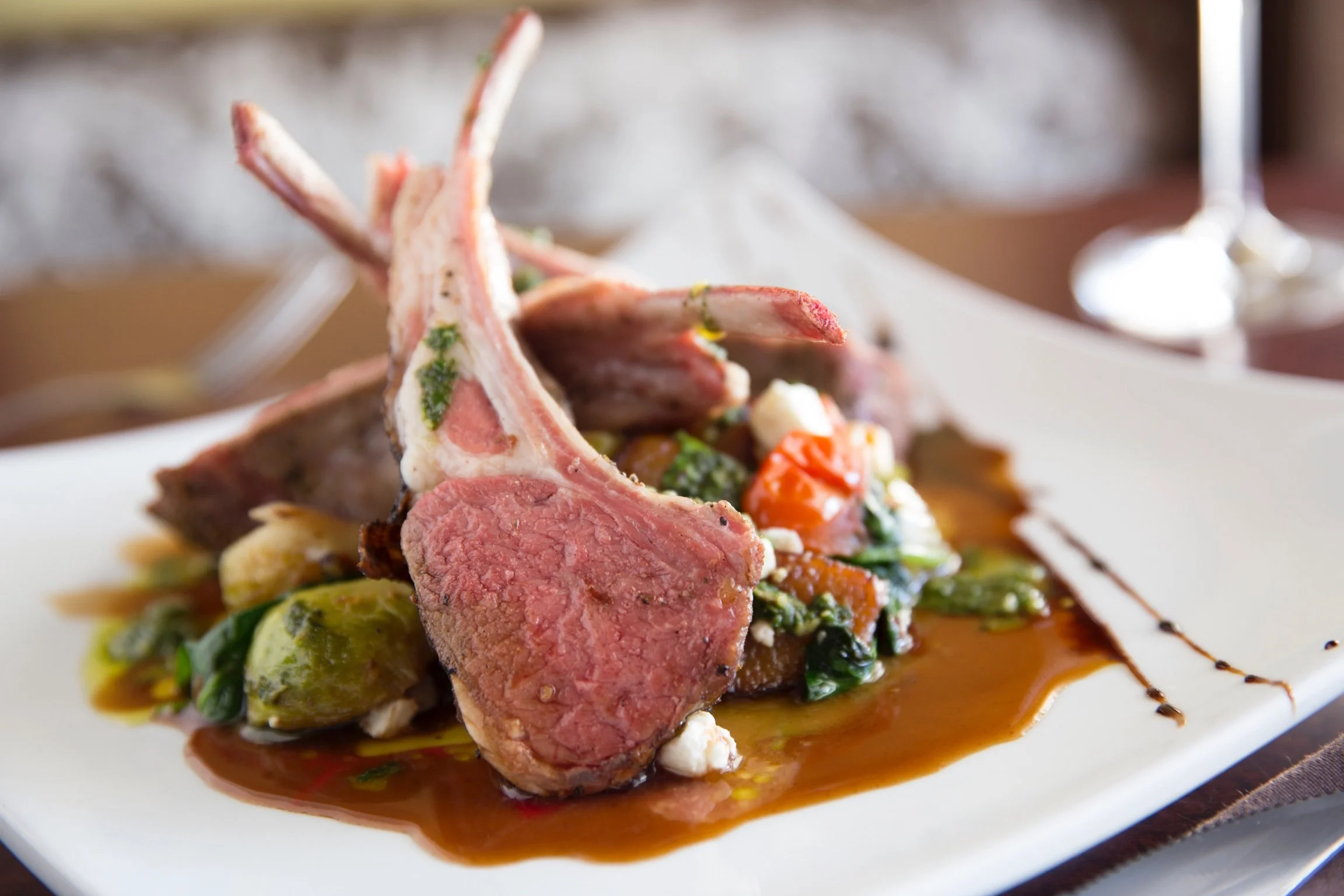
Xhani is the head chef of Bistro 217 and also does all the ordering for sister restaurant, Rustic Table. He oversees menus that blend refined technique with locally sourced ingredients. He works closely with local fishermen, South Carolina farmers, and Adam Kirby’s farm, Lake Swamp Farm, incorporating seasonal vegetables, microgreens, honey, seafood, and specialty products into ever-changing daily specials.
For Xhani, the appeal of cooking remains the same as it was when he first stepped into culinary school in France. “This career came out of nowhere,” he says. “But I love that every day is different. There’s never a dull moment in the kitchen. Anne and Adam have been very good to me, and I have a great relationship with them. I don’t see myself going anywhere else.”
More than two decades after arriving in Pawleys Island, Chef Elvis Xhani’s unexpected journey has become an essential part of Bistro 217’s story—and a testament to how far passion, curiosity, and perseverance can take someone.
Check out the menu at bistro217.com