
Charleston Seafood Towers Are All the Rage: Worth It or Not?
There’s something effortlessly theatrical about seeing a seafood tower set down in the center of a table. The gleaming tiers of shellfish, the sparkle of ice against metal, the aromatic perfume of brine and lemon—it’s a moment that invites everyone to lean in, to share, to dive deep. At its heart, a seafood tower is a celebration: of the ocean’s bounty, of culinary precision, and of conviviality. But what exactly makes a seafood tower both irresistible and worth it despite its price tag? And where in Charleston might you experience one at its finest?
Let’s figure it out together…
A Taste of the Sea: Why We Love It
Part of what makes a seafood tower so compelling is its visual drama. It’s not just food—it’s a centerpiece, a social moment, and definitely a photo snap worthy of a place on your Instagram feed. But beneath the showmanship lies a delicate balance of flavor, texture, temperature, and selection. To execute it well, a chef must curate a lineup of shellfish that not only complements one another, but also highlights the distinct individuality of each.
Oysters and clams bring brininess and a silky chew. Jumbo shrimp offer a firm sweetness. Crab claws are succulent and rich. Lobster tails or claws add depth and luxury. Scallops and mussels often make an appearance to add to the depth of the presentation. The interplay among these components—the crispness of one, the buttery richness of another, the chill from the ice—makes every bite a new discovery. A top-tier tower feels like tasting a seaside cross-section, where every level offers something slightly different yet in harmony.
Yet it’s the behind-the-scenes labor and logistics that often tip the scales toward “luxury price.” Getting fresh shellfish, shucking with precision, expertly transporting, maintaining ideal temperatures, and plating beautifully all add up. And because much of the seafood used is highly perishable or seasonal, restaurants must handle waste, rotate inventory frequently, and pay premium freight to local fishers or suppliers. So when you order a seafood tower, you’re not just paying for what’s on the plate—you’re investing in all the care, timing, and expertise that gets it there.
Common Cast of Characters
When you glance at a seafood tower, you’ll usually see several familiar players. Oysters on the half shell nearly always claim prime real estate—plump, chilled, unadorned. Shrimp, perhaps peeled with the tail still on—or waiting for you to earn it with a good peel-and-eat exploration—is always a classic. Then come crab legs or claws, often snow crab or Dungeness, cracked just enough to let you dig in with your fingers or utensils. Lobster might appear in claw or tail form—sometimes steamed, sometimes chilled. Mussels in their shells (steamed with white wine or garlic), marinated clams, scallops seared or raw, and occasionally sashimi slices or ceviche rounds out more adventurous towers. Whitefish dip of some kind can also pop up, you just never know.
They don’t come alone either. Cocktail sauce, tangy, house-made mignonettes, lemon wedges, or maybe a spicy aioli are all on call too. The shellfish is almost always served in tiers atop crushed ice—both for chill and presentation. And often, the tower is paired with accompaniments like crackers, crusty bread, and drawn butter (especially for lobster and crab). And more times than not, you can always add caviar.
Every tower is a bit different: a seafood tower in New England might emphasize Jonah crab, littleneck clams, and cold scallops, while a Lowcountry tower might lean heavier on local shrimp, oysters, and blue crab. The best ones feel locally anchored: part theater, part territory.
How to Spot a High-Quality Tower
Not all seafood towers are created equal. To know whether you’re getting top-tier, keep your senses sharp.
First, freshness is everything. Shellfish should smell like the ocean—clean, briny, not overly fishy or ammonia-adjacent. Oysters should glisten in their shells, not look dull or dried at the edges. Shrimp and crab meat should snap slightly, feel firm, not mushy. Lobster claw meat should have texture and density—not watery or soft.
Second, temperature matters. The seafood should be ice-cold (but not frozen), with no warm patches. The platter or tier should hold cold well; melted water should drain effectively. If you get warm crustaceans, either they were sitting too long or were reheated—both scenarios are less than desirable.
Third, presentation is more than vanity. A well-built tower distributes weight, balances tiers, and showcases the shellfish—not buried under ice or hidden by sauce. The arrangement allows access from all sides, with shells cracked just enough to help you dive in without brute force. Tools (shell crackers, picks, etc.) should be thoughtfully provided, and sauces served separately to preserve textures.
Fourth, the variety should make sense. You don’t need a wall of ten identical shrimp. A strong tower offers contrast—different shellfish, sizes, textures, flavors. And the quality of what’s selected matters: local oysters, fresh-caught shrimp, blue crab claws—not everything flown in cheaply and indiscriminately.
Finally, portion-to-price ratio gives a clue. Premium towers often cost more, but you should see why: more premium species, generous portions, meticulous preparation. If a tower is priced exorbitantly yet packed with meager bits, it’s underdelivering and you have cause to be annoyed.
Why It’s Worth the Splurge
There’s a ritual in sharing a seafood tower. It slows a meal into an experience. Conversations pause while someone cracks a shell, or someone else squeezes lemon over the oysters and shrimp. The pacing turns dinner into a communion.
Not to mention that the economy of scale is interesting: when a group splits a tower, the price per serving can fall into very reasonable bounds, making it more approachable. You get access to premium shellfish you might not order individually—imagine two or three lobster tails, jumbo shrimp, crab claws—all shared. Who doesn’t love that?
Charleston’s Tower-Worth Spots
It’s kind of hard to choose our favorite spots to savor a seafood tower in Charleston. The truth is, we’re pretty spoiled here. That said—and in no particular order—here are a handful of our suggestions.
The Darling Oyster Bar
513 King Street
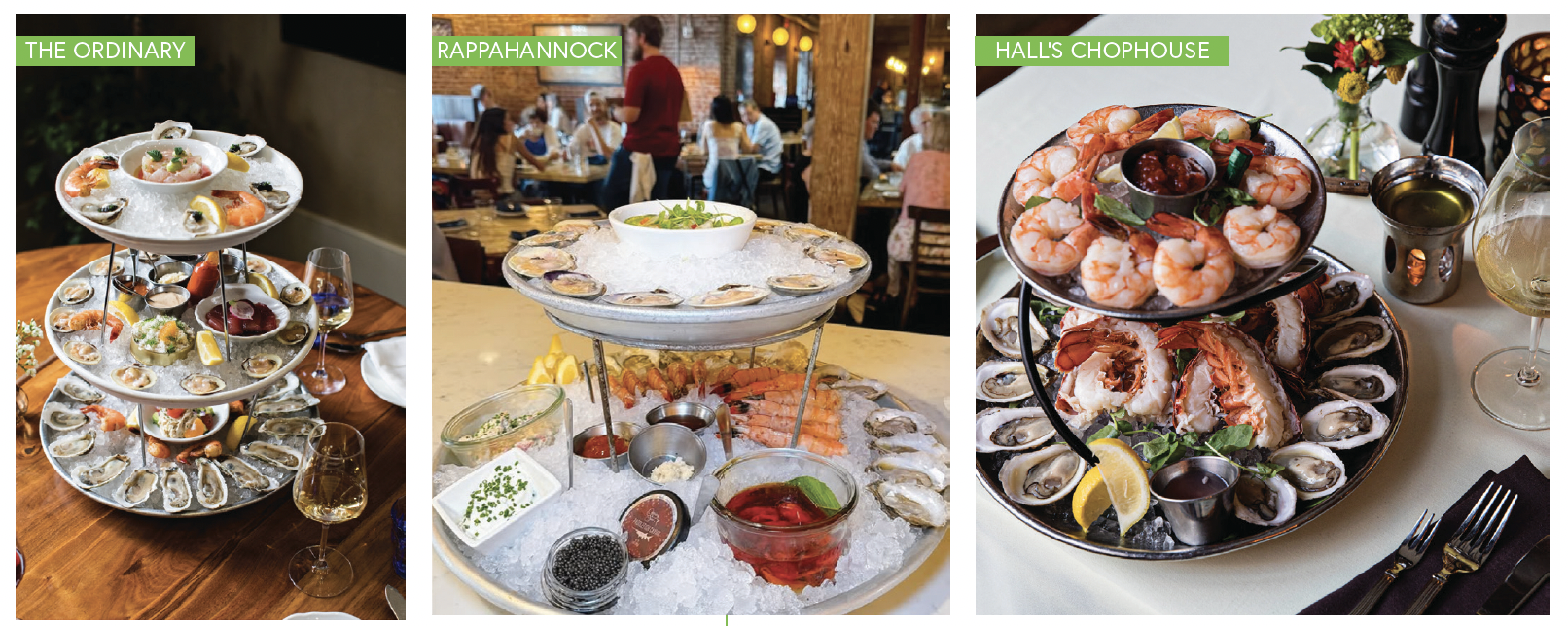
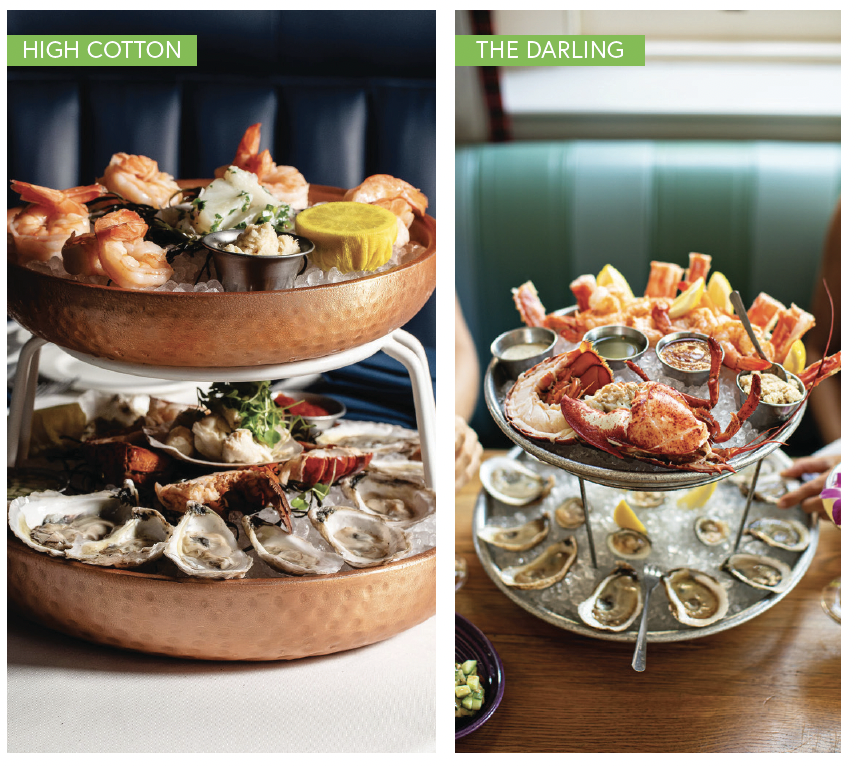
Situated along Charleston’s bustling King Street, The Darling Oyster Bar captures the city’s coastal spirit with style and sophistication. Inside the stunning restaurant, guests gather around a lively raw bar where shuckers work their magic in full view of passersby peeking through the oversized front window. The menu celebrates the best of the Lowcountry’s waters—oysters, shrimp, and crab pulled fresh from nearby shores—served with the kind of care that turns a meal into an experience. And while their towering “Seafood Plateau” rightfully steals the show, it’s the details—from the briny perfection of each oyster to the over-the-top King Crab Claw Bloody Mary—that make The Darling a must-stop for anyone craving the true taste of Charleston.
The Ordinary
544 King Street
Set in a beautifully restored 1920s bank on Upper King Street, The Ordinary turns Charleston’s bounty into pure spectacle. Their seafood tower—explained as “a chef’s selection of premium seafood and shellfish”—arrives like edible art, piled high with oysters, shrimp, clams, caviar, and more, all glistening on ice. Elegant yet approachable, it’s the perfect expression that when seafood is this fresh, nothing about it is ordinary.
Hall’s Chophouse
434 King Street
A Charleston institution best known for its impeccable service and signature steaks, Halls Chophouse also proves that surf can rival turf. Their indulgent tower for two or four is a showstopper—an icy, glistening spread of oysters, shrimp, and tender lobster tail arranged with precision and flair. It’s a celebration of decadence, pairing the elegance of fine dining with the freshness of the Lowcountry’s waters—proof that at Halls, every detail, from steak to shellfish, is done to perfection.
Rappahannock Oyster Bar
701 East Bay Street
Tucked inside the historic Cigar Factory, Rappahannock Oyster Bar brings a modern edge to Charleston’s seafood scene while honoring its deep coastal roots. Their seafood tower is a feast worthy of its reputation—featuring 12 oysters, 12 chilled shrimp, 12 littleneck clams, 1 oz of paddlefish caviar, 6 oz of ceviche, smoked fish dip, and the chef’s seasonal seafood salad, all elegantly presented with classic accoutrements.
IOP Raw Bar
1515 Palm Boulevard
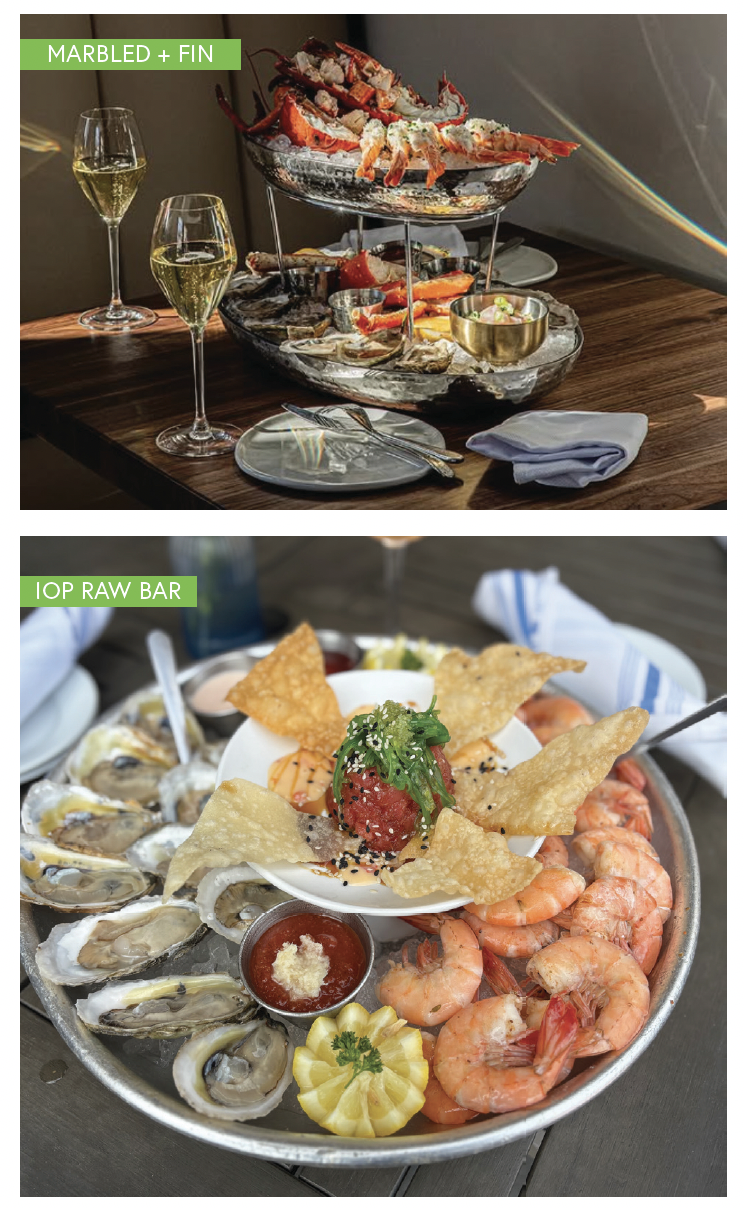
Located in the heart of Isle of Palms, IOP Raw brings a refined yet relaxed touch to coastal dining. Their tower is a local favorite—a platter full of peel and eat shrimp, oysters, and tuna tartare. Fresh and beautifully presented, it’s a true taste of the Lowcountry that pairs perfectly with a glass of something crisp and cold.
High Cotton
199 East Bay Street
When you’re in the mood for a refined Southern dining experience, High Cotton is an easy call to make. Amongst a flavorful menu that pulls from both land and sea, their seafood tower is a testament to the region's rich culinary traditions, featuring a selection of fresh, local seafood including, “oysters on the half-shell, poached shrimp, lobster tail, ceviche, jumbo lump crab, cocktail sauce, cucumber mignonette, horseradish, and lemon.”
Fleet Landing Restaurant & Bar
186 Concord Street
Offering waterfront dining with stunning views and relaxed comfort food, Fleet Landing’s newest addition of a raw bar in recent years makes serving up impressive seafood towers a breeze. Featuring split cold-water lobster tail, snow crab claws, oysters, shrimp cocktail, with guests’ choice of smoked fish dip or crab dip and ceviche or tartare, this is a customizable experience to enjoy.
Marbled + Fin
480 East Bay Street, Suite A
Marbled & Fin stands out in Charleston as a modern seafood destination, offering both cold and hot seafood tower options for the first time on our roundup. From chilled oysters, shrimp, and Maine lobster to warm scallops, Littleneck Clams, and more, their towers help make Marbled & Fin a must-visit for seafood lovers seeking variety and flair.
Amen Street
205 E Bay St
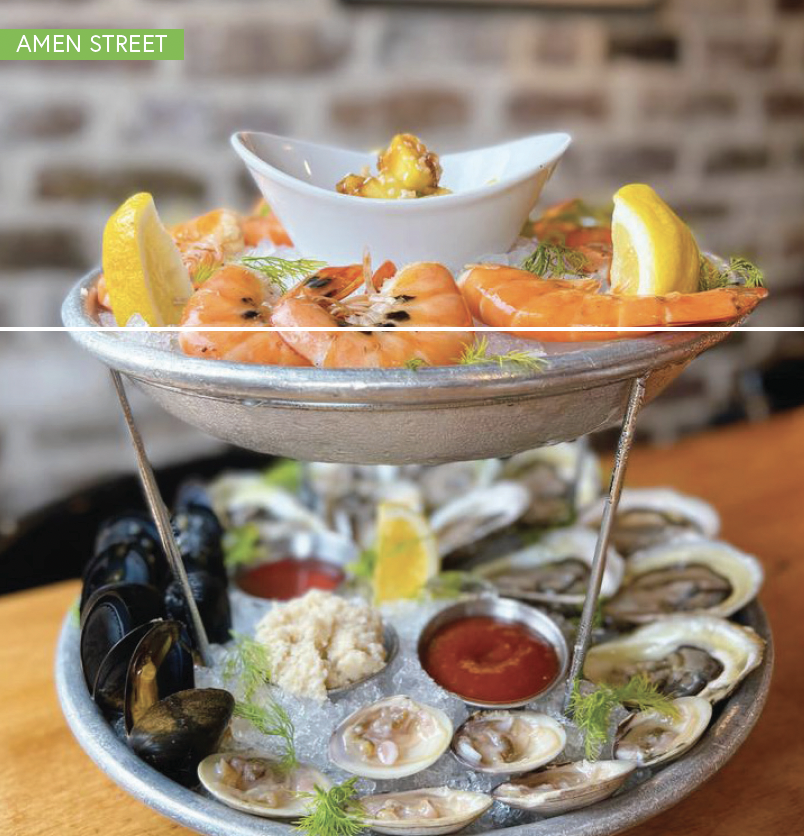
Tucked into the corner of East Bay and Cumberland, Amen Street Fish & Raw Bar is a Charleston favorite that blends historic charm with a lively energy. Housed in a restored 19th-century building, it’s known for its beautiful raw bar and expertly crafted seafood towers piled high with local oysters, shrimp, and crab. Whether you’re perched at the marble bar with a glass of crisp white wine or gathered around a table sharing shellfish and stories, Amen Street captures that perfect balance of Lowcountry elegance and easygoing Southern hospitality. As for their seafood tower, guests can expect “peel & eat shrimp, mussels with candid garlic vinaigrette, oysters, clams, tuna tartare, with sides of cocktail sauce, horseradish, and mignonette,” according to their menu.
Savoring Your Tower in Charleston
It’s important to plan ahead; many stellar restaurants require reservations, especially for large parties wanting a tower. It often arrives early in the meal—so don’t fill up on appetizers. Pace yourself. There’s often richness ahead: buttery crab, sweet lobster, briny oysters. Let each bite linger.
Ask your server for wine or beer pairings. Crisp Chablis, dry Riesling, or a clean Albariño cut through shellfish richness. Locally, a good Lowcountry white or a citrusy rosé can dance alongside mignonette and drawn butter. Don’t forget the condiments. Let the shellfish shine, but dab cocktail sauce, spoon a little mignonette, and add a dash of hot sauce when wanted. The tower’s architecture is meant to be interactive.
Lastly, pay attention to the story. Ask your server which shrimp came from coastal South Carolina? Which oysters were grown nearby? When the restaurant shares provenance, the seafood becomes more than sustenance—it becomes part of the narrative.
At its best, a seafood tower is a microcosm of a place. In Charleston, a well-executed one channels the salt marshes, the shrimp boats, the oyster leases, the tides, and the centuries-old relationship between sea and cuisine. You don’t just eat it—you experience it.
So when you wander Charleston’s buzzing streets, let a seafood tower be your compass. Begin your meal with it, slow down, share it, talk about it. You’ll taste more than shellfish. You’ll taste the Lowcountry at its best.