Women on the Water: Five Oyster Farmers along the Southern Coast
By Pamela Jouan
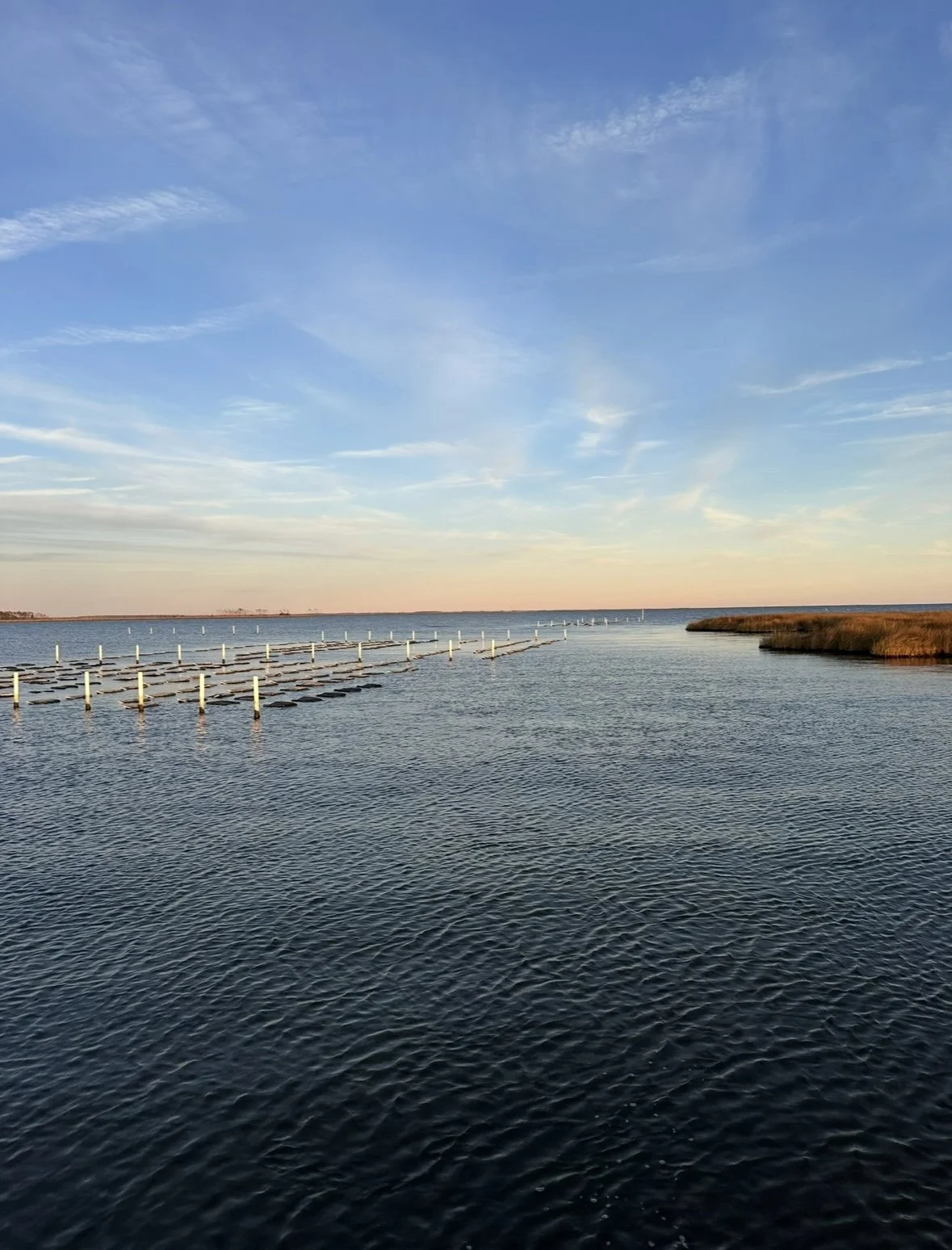
Oyster farming is not a romantic profession, though it can look that way from the shore. It’s cold mornings and sunburned afternoons, fingers cracked by brine and backs bent over floating cages that demand constant tending. It’s work that requires patience, precision, and faith in forces of nature you cannot control. And in the Carolinas and Georgia, it is also surprisingly new.
While wild oysters are part of the history of Southern foodways, modern off-bottom oyster farming didn’t take hold along this part of the South until the early 2000s. What seems like an obvious solution—restoring depleted reefs while creating a sustainable food source—has moved slowly, tangled in lengthy permitting processes and sometimes years-long lease approvals. Still, the farms arrived. And with them, women.
This story spotlights five female oyster farmers working along Southern coastlines, each drawn to the water by different paths but united by the same conviction: that farming oysters is both livelihood and stewardship. These are former teachers, policy professionals, corporate employees, and current restaurateurs; women who reached a point where indoor work no longer made sense, and the pull of tide and season proved stronger than any straight-line career.
Sarah Doss, RX Restaurant & Lucy Bea Oysters, Wilmington, NC
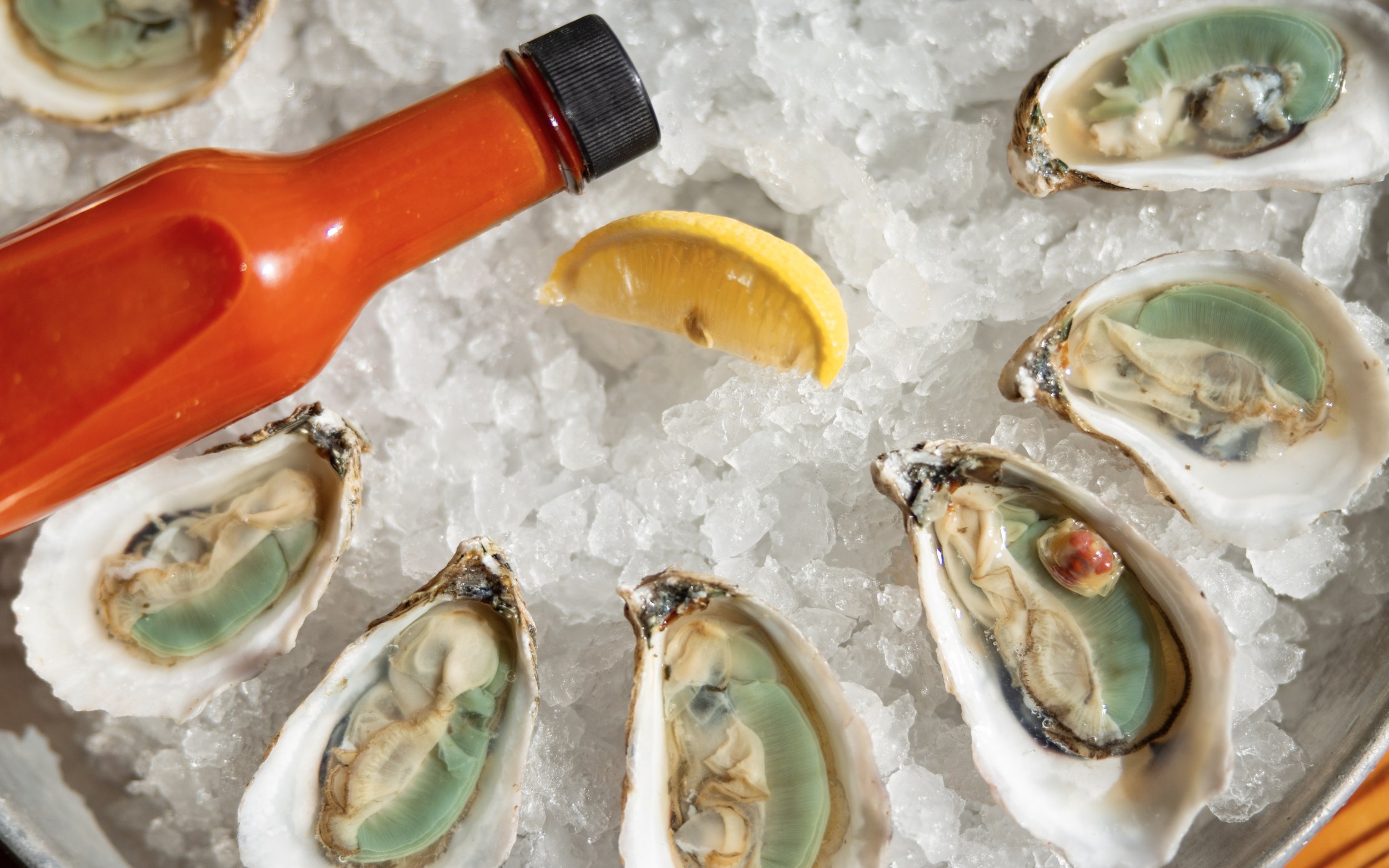
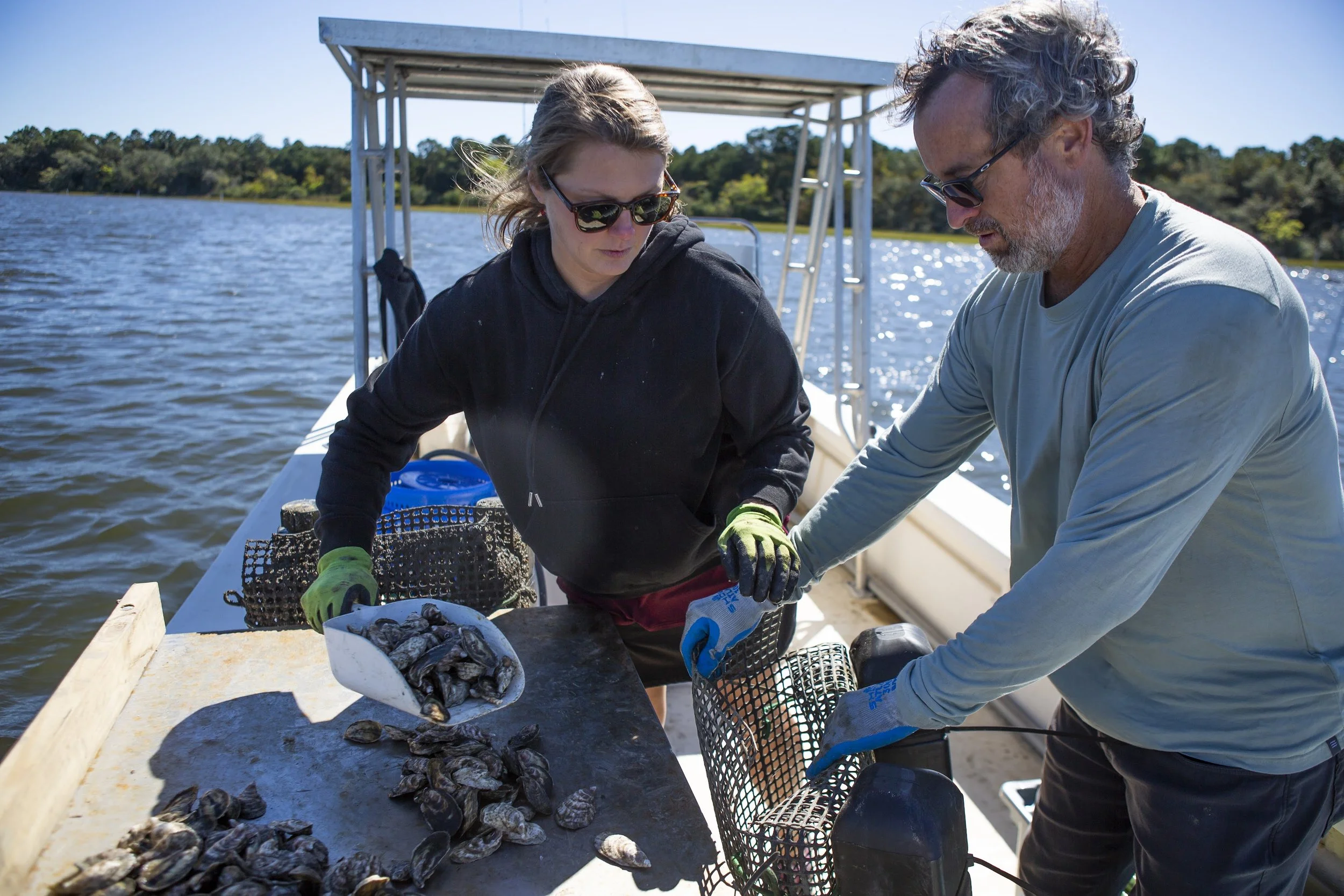
Sarah Doss didn’t add an oyster farm to her life so much as a sustainable, self-sourced pillar to RX’s kitchen.
She grew up in eastern North Carolina, where saltwater was already in her DNA. “My dad is just such a water person,” she says. “It’s something I’ve always been drawn to.” That pull never left, even as her path took her to UNC Wilmington, where she studied art and English—not science, not aquaculture.
Her grandparents were farmers. They grew tobacco and sweet potatoes. She had kept bees. Sustainability wasn’t a trend; it was built-in—muscle memory. When she became more involved in the restaurant her husband James Doss had opened in 2012, that instinct sharpened: composting all restaurant waste, organizing field trips to recycling centers, making the operation greener, step by step. “It’s always been in my blood to work the land or water in some capacity,” she reflects.
Then came COVID—the reckoning. The restaurant closed. One day, they looked at each other and said what felt impossibly big but necessary: “We weren’t having enough fun. We needed to be outside more.” They also needed another stream of income to pandemic-proof their lives.
Since they already loved to get on the water and dig up mussels, oysters became a natural extension.
After apprenticing for nearly six months with mariculture farmer James Hargrove, learning by actually doing—unpaid, elbows deep, absorbing the rhythms of the water—they subleased space from him, then secured their own lease.
Sarah says she looks up to other female pioneers around her: the late fisherwoman Lena Ritter, who helped preserve nearby Stump Sound; Susan Hill, who sells them oyster seed; Ana Shellem, a wild harvester; and Cindy Garb, a fellow spearfish diver (yes, Sarah and her husband hunt the invasive lionfish in their spare time!).
Today, Sarah stands as a bridge-builder: between her restaurant and the ocean. She understands oysters the way she understands bees—essential organisms that quietly hold entire systems together. For her, farming oysters is no longer just a pivot; it’s a heartfelt mission.
Jenn Dixon, Little Star Oyster Farm, Pamlico Sound, NC
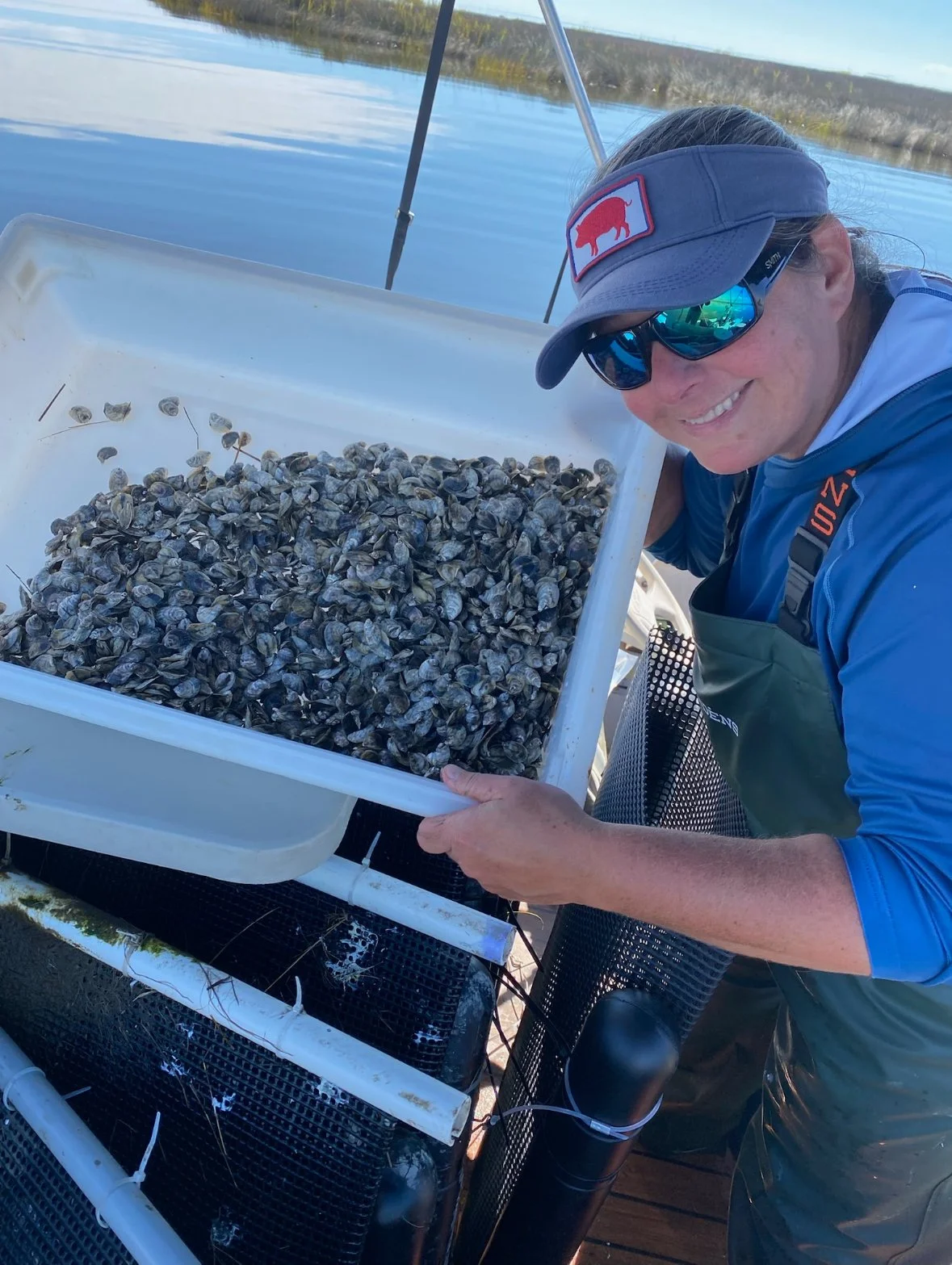
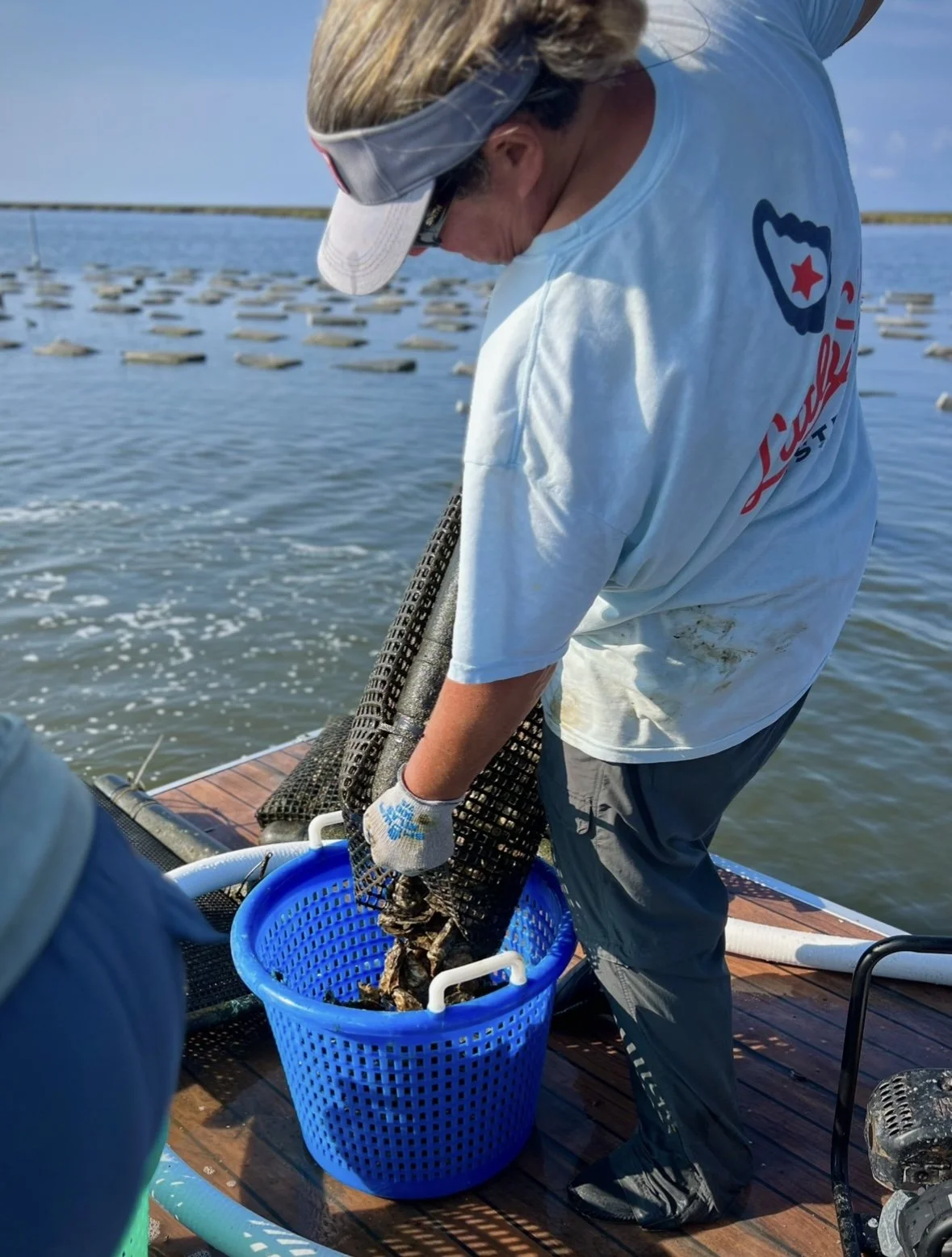
Jenn Dixon didn’t just change careers—she changed classrooms. For years, her world was four walls and lesson plans, teaching on North Carolina’s Outer Banks and quietly worrying about the students who hoped to make their lives on the water. Sustainability was a personal quest. Would there still be a way for them to work the waters they loved when they grew up?
The answer arrived on a drive home from visiting a friend’s oyster farm. Katherine McGlade’s Slash Creek, as it happens. “I was silent the whole way home,” Dixon recalls. “All I could think was, this is it.”
That quiet car ride marked the moment she traded an indoor classroom for an outdoor one. In 2022, Dixon planted her first crop of oysters alongside her son, stepping into the cold water with a clarity she hadn’t felt in years. Even on frigid mornings, wetsuit zipped, she loves being out there. The work is physical, repetitive, and demanding. It’s also deeply intentional.
Each oyster is handled again and again—tumbled, sorted, cleaned—manicured, really, into a deep-cupped shell that chefs prize for both beauty and flavor. “It’s nurtured,” she says. “Loved.” The result is an oyster shaped by both nature and attention, a reflection of Dixon herself.
But her vision extends far beyond the farm. Dixon believes oyster mariculture can be a pathway—especially for women—to economic independence and environmental stewardship. She dreams of teaching socioeconomically disadvantaged women how to grow oysters, creating livelihoods for themselves and their whole families. “Plus, it’s the only carbon net-positive farming I know,” she says. “It gives more than it takes.”
Her favorite moments, though, are closer to home. Farming alongside her son, watching his pride grow with each harvest, Dixon sees legacy taking shape; knowledge passed hand to hand, generation to generation.
In the end, she’s still teaching. This classroom just happens to float.
Katherine McGlade, Slash Creek Oyster Farm, Pamlico Sound, NC
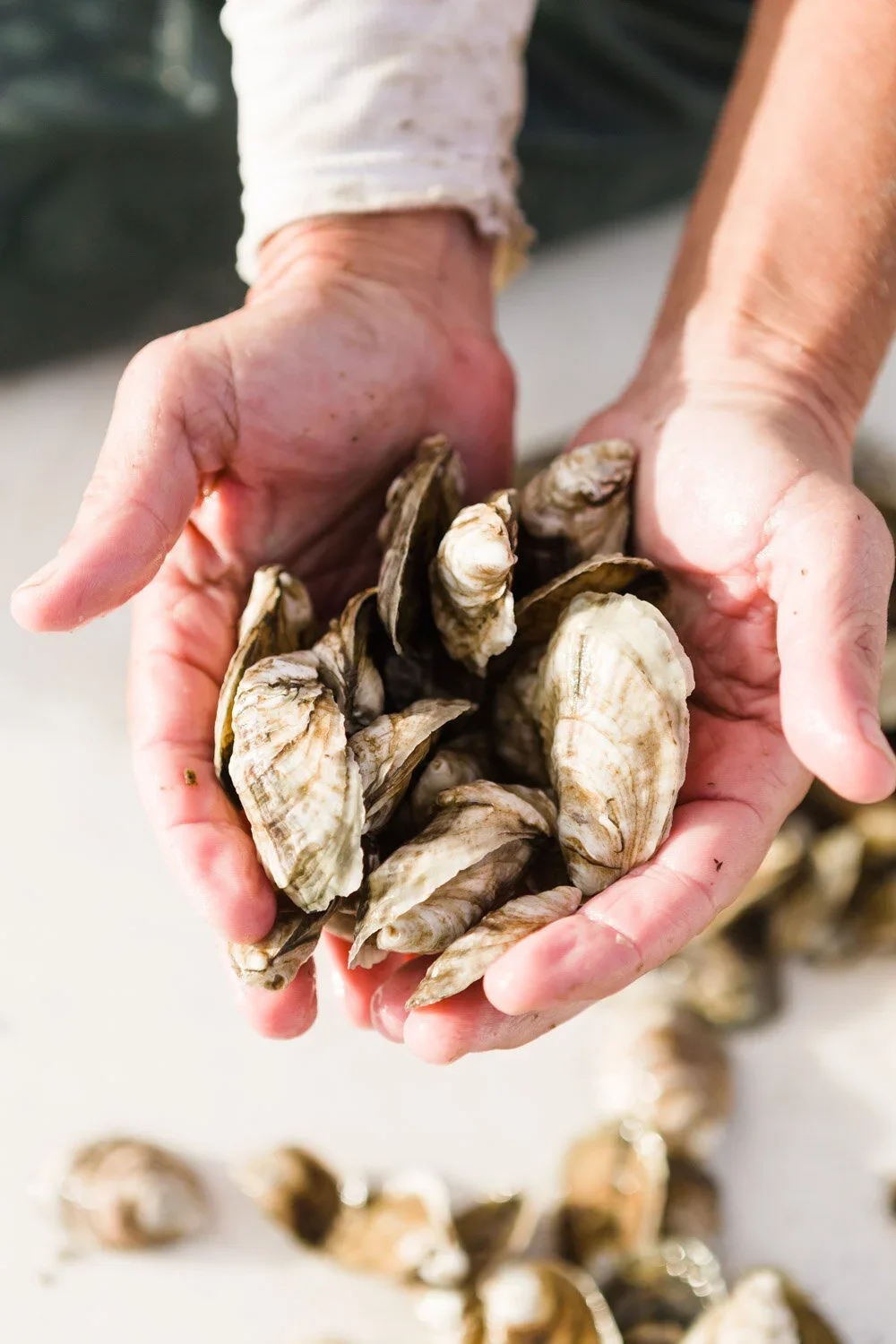
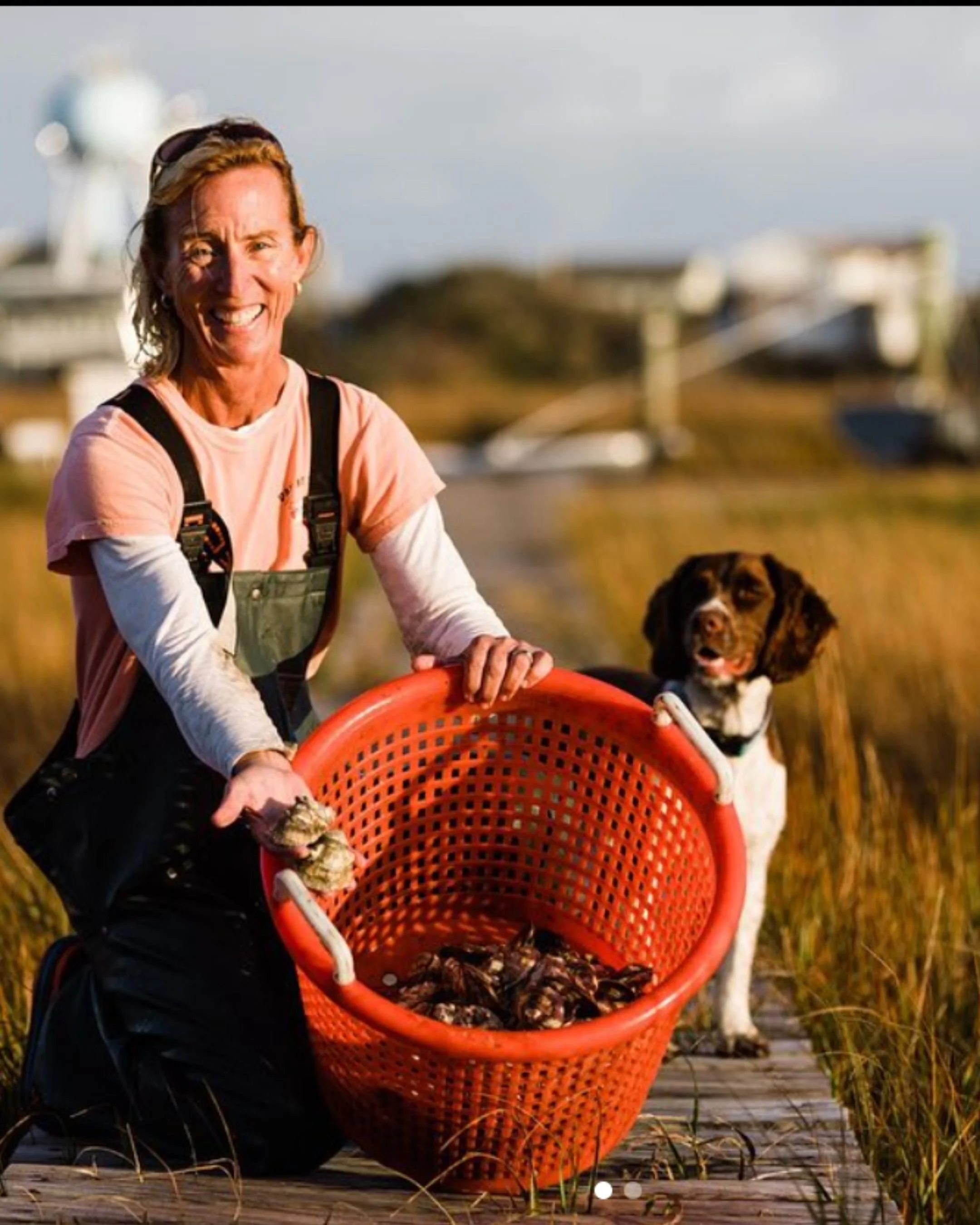
Katherine McGlade never set out to be a disruptor. She was simply unwilling to accept an answer that didn’t make sense about an industry that did.
Her relationship with saltwater began early, growing up in Connecticut, not far from the Long Island Sound, where she learned to swim. In her 40’s, she went to grad school at Duke Marine Lab in Beaufort, NC, where she met her husband, a fisherman who lived in Hatteras, NC., a place defined by working water.
McGlade had already lived a full professional life when she arrived in Hatteras—two decades in consulting and marine policy. But sitting behind a desk began to feel wrong. She wanted work that existed where she was. She studied her surroundings and found a glaring contradiction: demand for oysters was booming nationwide, Virginia was producing millions, and North Carolina—rich in ideal waters—was producing almost none.
The problem wasn’t nature. It was paperwork.
When McGlade applied for an oyster lease, she was denied. Then denied again. Four times total. Each rejection only sharpened her focus. She asked to observe the site testing. She followed the chain of authority. Eventually, she traced the blockage to a federal rule quietly accepted years earlier: not a single blade of submerged seagrass could exist beneath a lease. A protection measure, applied without nuance, had stalled an entire industry before it began.
“If I didn't have the background that I had, in addition to having just gone to graduate school and learned a lot about the different regulatory bodies in the saltwater environment, I might not have had all the tools to take on this fight,” she explains.
But she did. So, she went to Raleigh, where she tied oysters to economic infrastructure—jobs for fishing communities under pressure, tax revenue, and environmental gain wrapped into one, and it worked. The issue wasn’t partisan. “There are no sides in oysters,” she says. “Everyone wanted this to succeed.”
There is no doubt that McGlade helped pioneer North Carolina’s oyster industry. Today, she often warns newcomers, “Don’t become an oyster farmer unless you can handle heartbreak.” And sure, while she’s referring to storms, her story proves something else: resilience isn’t just surviving Mother Nature—it’s reshaping the system so others don’t have to fight the same ones.
Laura Solomon, Tybee Oyster Farm, Bull River, NC
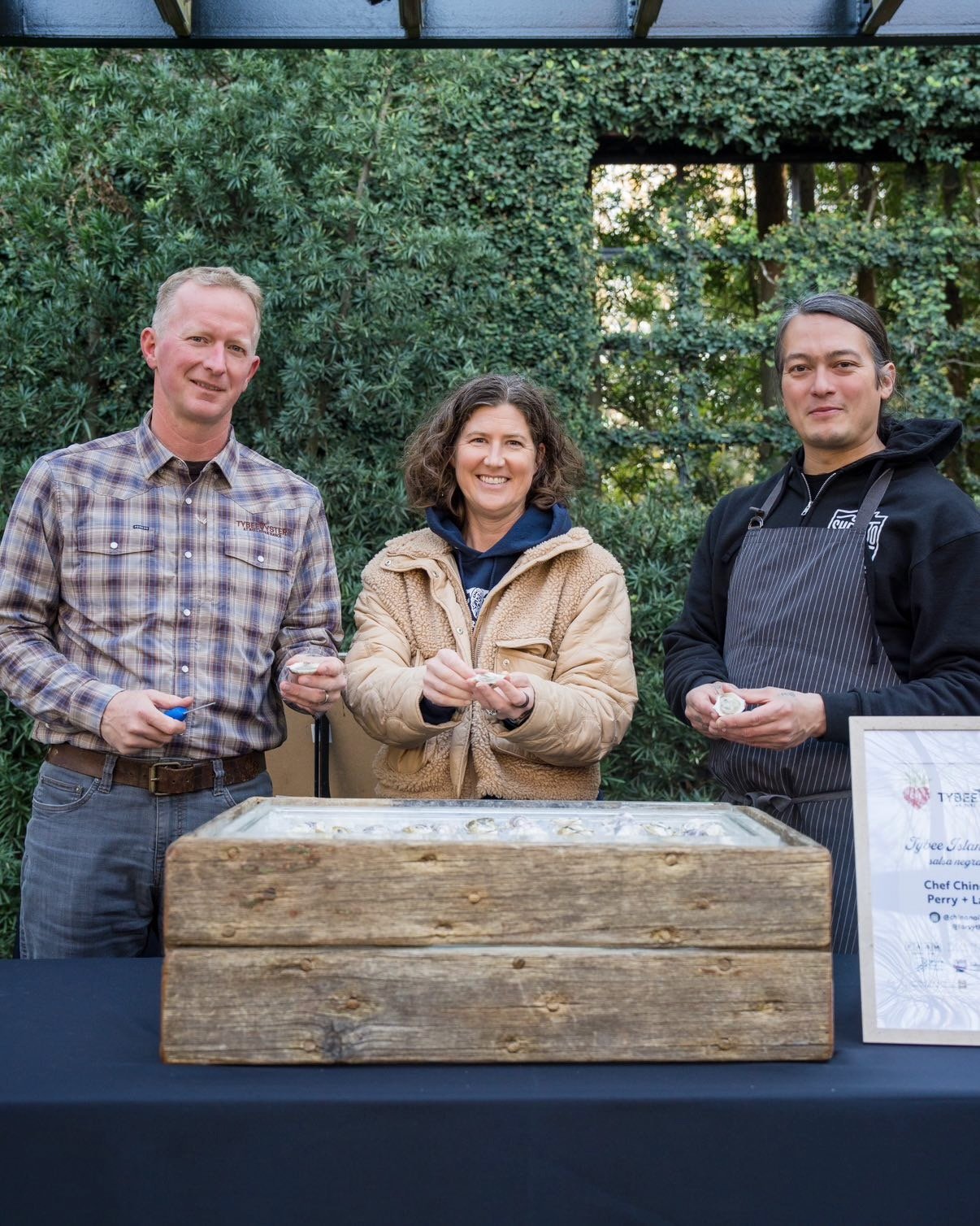
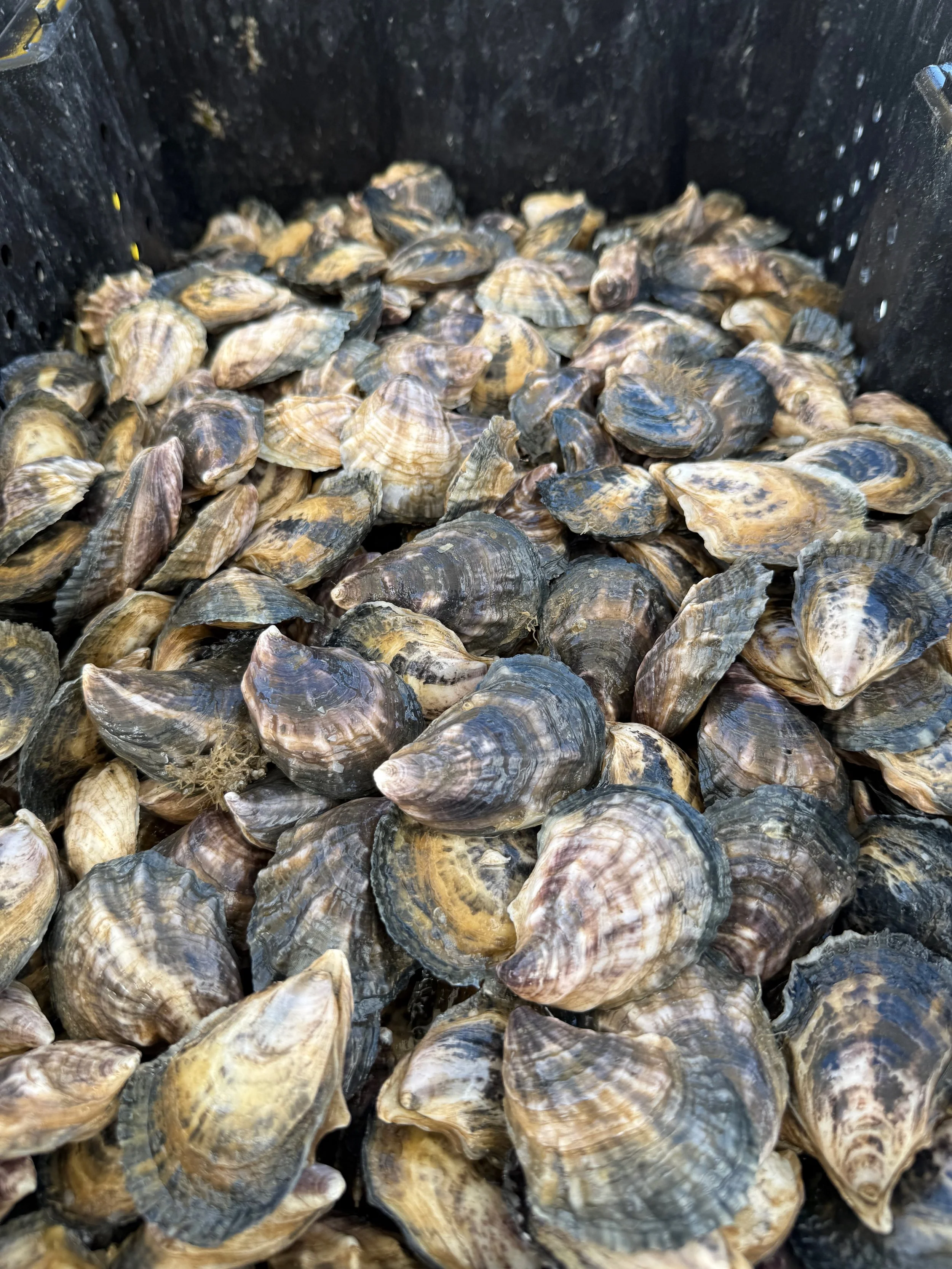
For Laura Solomon, oyster farming didn’t begin as a business idea but as a family tradition. Her husband, Perry, grew up on Tybee Island, bonded to the water. Allergic to crustaceans, oysters were the only part of Georgia’s coastal bounty he could safely eat. Wild-harvesting them with his father and grandfather became a ritual.
When Laura and Perry started dating as students at Georgia Tech, she was folded into that tradition: weekends in Tybee, gathering oysters by hand, and backyard roasts. As they traveled abroad and lived in the Virginia Beach area during Perry’s Navy career, their appreciation for oysters deepened. There, unlike in Georgia, the farmed oyster industry was thriving.
Georgia’s first floating oyster farm grew from that absence—and from Laura’s belief that farming could support both the environment and the people who depend on it. It took a nerve-wracking 15 months to get their first permit, but it was worth it. “Farmed oysters take pressure off fragile wild reefs while helping restore coastal ecosystems,” she explains.
Just as important was building a farm that reflected her values and being part of a community where best practices were meant to be shared. “You don't get a lot of benefits from being a party of one,” Laura adds. “You need a group to get things like insurance and regulatory support; a community to lean on. That is what we have tried to cultivate on the Georgia coast.”
But this wasn’t just about oysters. It was also about how—and who—got to grow them. Fiercely feminist and trained as an industrial engineer, Laura was intentional about building a farm that didn’t rely on brute strength alone. The Solomons chose lightweight, female-friendly FlipFarm gear, expanding who could work the water. Today, women make up half the team, and Laura’s own mother can still put in a full day on the farm.
Laura approaches oyster farming like motherhood: part data, part intuition, constant attention. She also views it as generational work. With a background in education and nonprofit strategy, she’s committed to workforce development—partnering with schools, engaging kids, and offering a tangible way to fight climate anxiety through stewardship.
Tybee Oyster Farm isn’t just Georgia’s first floating oyster farm. It’s a testament that sustainability, community, and even feminism can thrive—one carefully tended oyster at a time.
Kendra Tidwell, Barrier Island Oyster Company, Wadmalaw Island, SC
www.barrierislandoysters.com
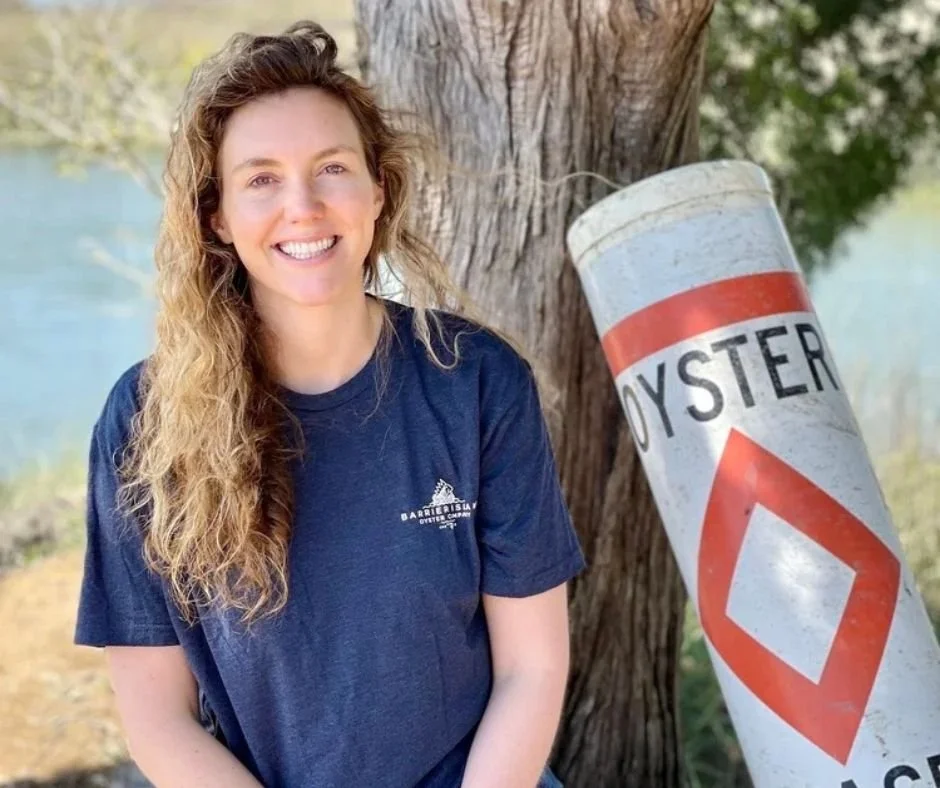
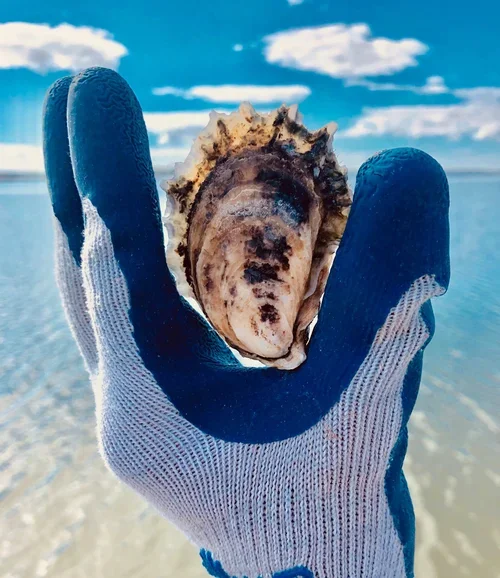
Kendra Tidwell’s path to oyster farming didn’t begin on the water—it began with a love of eating oysters and a slightly unshakable determination to live in Charleston, South Carolina. When she and her husband, Josh Ebuch, finally made the move permanent in 2015, they weren’t chasing a legacy industry so much as building one of their own, rooted in food, family, and the Lowcountry they wanted their children to grow up in.
Neither came from aquaculture. Josh was an English major; Kendra studied religion and education and worked as a school counselor.
What they shared was curiosity—about flavor, place, and how oysters from different waters could taste wildly distinct. “A friend working with the South Carolina Oyster Recycling & Enhancement Program (SCORE) opened our eyes to just how few oyster farms existed in the state. A book, Shucked by Erin Byers Murray, filled in the rest.” The question quickly became: why not them?
That curiosity hardened into resolve during a grueling, two-year research and permitting process. As South Carolina’s first non-provisional floating oyster farm, every detail had to be right. The application process tested Kendra’s patience and principles in equal measure, but her determination to do it for all the right reasons never wavered.
Even today, she notes the Department of Natural Resources (DNR) are hardliners about regulations. “It’s a tough business to be in,” she admits, “with a lot of mixed agendas. But it’s about preserving a Lowcountry way of life, for us, and our kids. Not only in terms of jobs and a business, but also having clean waterways to swim in. We want future generations to reap the benefits of our hard work and also understand the importance of what oysters do for the environment.”
Because they were first, others often come to them for guidance. Kendra sees that as a responsibility, not a burden. “We don’t just want the industry to survive but thrive.”
At events, they shuck, talk, teach, and connect. It’s a family affair—kids included. With modern tools like a davit arm on the boat to ease the physical labor of flipping baskets, there's a seat for everybody at the table.
For Kendra Tidwell, oyster farming isn’t just about what’s served on the half shell—it’s about leaving the Lowcountry’s waters cleaner, its traditions stronger, and a way of life worth handing down.