
TASTY TRIPS: A Hometown Chef Recommends Augusta: Where Tradition Meets Transition

By Megan Hamner
For plenty of people outside Georgia, Augusta exists as a city glimpsed through the cloud of Masters coverage: manicured fairways, azaleas, pressed polos, pimento cheese, and a week of peak spring spectacle. But that version of Augusta, while very real, is incomplete. In contrast, locals—especially those leading the city's dining scene—paint a quieter, more grounded, and much more interesting picture than the golf shorthand suggests.
This is true for Todd Schafer, chef-owner of Abel Brown, a polished Southern kitchen and oyster bar and one of Augusta’s best-known restaurants. Schafer, a 2026 James Beard semifinalist, was born and raised in Augusta, left his hometown to work in top kitchens, and returned with his own culinary vision. Inspired early by his mother’s cookbooks and French technique, he studied at the Culinary Institute of America and worked with French chefs. But Augusta always drew him back. “People here say you can leave, but you’ll always return.”
That sense of return matters here. To understand Augusta now, note that Schafer isn’t selling the city as the next Charleston, and he’s wise not to. His perspective is more specific and honest: Augusta is in transition. The city remains rooted in old customs and family ties, yet newcomers bring fresh tastes. Legacy and transition now define Augusta. As Schafer notes, “It’s not a food city at the moment, but it is evolving.”
Where to Eat
If you’re planning your first trip, Schafer’s recommendations offer a clear blueprint. Start with dinner—his perspective shapes the experience. Abel Brown is the anchor for good reason. The restaurant reflects the style he brought home: Southern at heart, refined by French training and California influence, but never fussy. Schafer isn’t interested in theatrics or food made for Instagram. “I keep it simple,” he said. “Technique is key. I don’t do gimmicky or fad stuff.”
Schafer’s approach goes beyond the plate. He emphasized hospitality above all else. “One of my overarching goals is I don’t want people to work at all when they’re in the building,” he said, describing Abel Brown’s discreet service. Travelers want to feel cared for, not rushed or processed, and his restaurant was built on that ideal. This approach makes it a must for visitors who want a sense of where the city is now. Abel Brown is Southern-rooted and ambitious. Precision without stiffness, high standards without pretension—this balance is hard to achieve and is likely why Schafer’s restaurant is now a fixture.
For an elevated dinner elsewhere, Schafer recommends Frog Hollow. It’s a local “hidden gem” known for farm-to-table fine dining and consistent quality. For a no-frills meal, he mentioned Happy House, a Korean spot he likes for its contrast to his own. He describes it as “crunchy, spicy, funky, and refreshingly different.”
What to Do
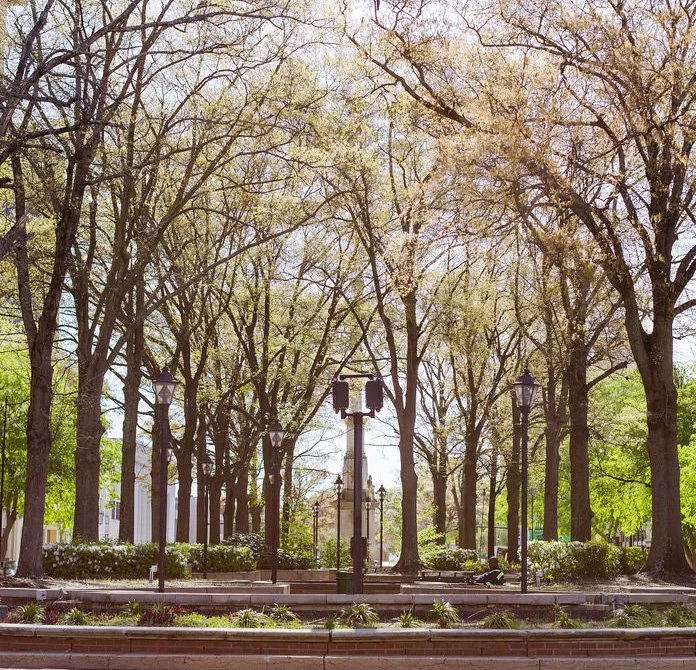
Outside the dining room, Schafer’s version of Augusta leans heavily on atmosphere. He recommended The Greenway as a good place to walk and get a feel for the city. He also pointed to Downtown Augusta and Broad Street, where revitalization efforts are underway and where the city’s older bones are still visible.
Then there is Summerville, locally known as The Hill, a residential area which Schafer described as especially beautiful in spring, when everything is in bloom. Listening to him talk about Augusta in April, you understand why the city can cast such a hold on people who know it best. “Augusta in April is just the best place on earth.” The weather is mild, the air moves, the flowers are out, and the city is briefly at its most luminous.
Of course, in Augusta, golf is always part of the story, whether you have a tee time or not. This theme runs through the city’s culinary and cultural offerings. But Schafer’s most interesting recommendation isn’t Augusta National, the famously exclusive course. It’s The Patch, the redesigned Augusta Municipal Golf Course, and The Loop, a new nine-hole short course. Both offer a more accessible entrance into Augusta’s golf culture. They’re public and community-driven. A reminder that golf in Augusta isn’t just exclusive; it’s woven into local life.
If your timing is right, Augusta’s local markets are worth a visit. The Augusta Market at the River takes place on Saturdays from March through November. It features local produce, crafts, and plenty of reasons to linger. There is also the Veggie Park Farmers Market on Thursday afternoons from April through December. Augusta Locally Grown offers online ordering of local, sustainable goods.
If you add a cultural stop, choose the Morris Museum of Art, set on the Riverwalk downtown. It's the oldest museum in the country focused on Southern art and artists—a perfect fit for your trip. Its quietly distinctive mood matches Augusta itself; spend an hour or two there before dinner or as an afternoon break to round out your weekend.
Where to Stay
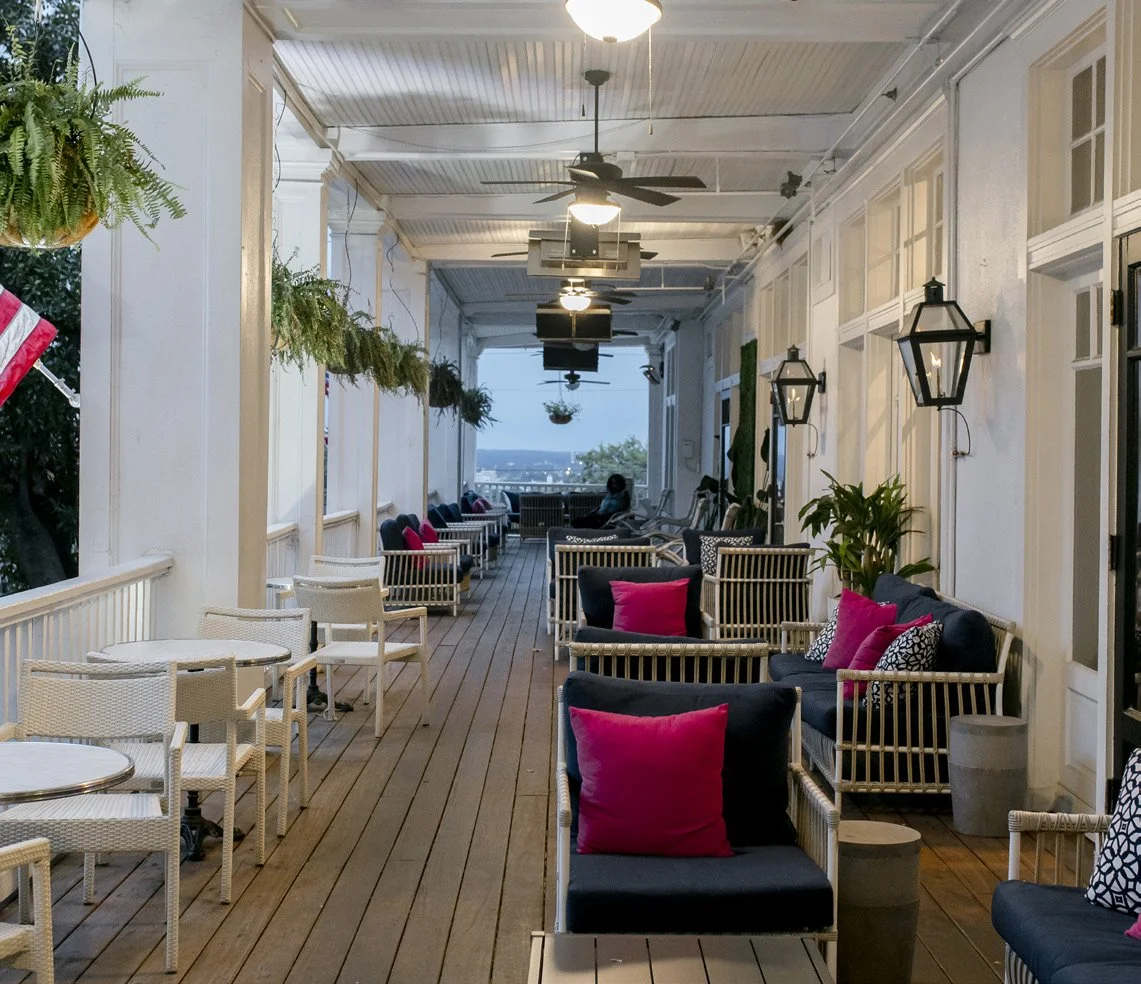
Every good trip needs a place to stay, and The Partridge Inn is an easy choice. As one of Augusta’s most historic hotels, it's a part of the city’s fabric and a standout option for visitors seeking personality, history, and authenticity.
It works as a home base because it fits the pace of the city Schafer describes. You can imagine slow mornings with coffee before heading out, afternoons spent exploring downtown, or the Hill, and evenings that begin with a drink and finish with a very good dinner. It has the kind of classic presence that rounds out the trip without making it feel precious. It also reinforces the larger point: Augusta is at its best when you take it at its own pace.
Getting around Augusta is fairly easy, which suits the city’s pace. Downtown is walkable in pockets, especially if you are spending time along Broad Street or near the river, but for a first-time visitor, a car or rideshare makes the most sense for stitching the trip together. Parking is generally manageable, and the distances between neighborhoods, restaurants, and golf spots are short enough that nothing feels like a haul. In other words, Augusta does not require logistical gymnastics. You can move through it without much stress, which is part of the appeal.
Schafer sees Augusta’s identity rooted in local pride, stewardship, and the belief that the city belongs to its residents. Instead of a checklist or golf pilgrimage, treat Augusta as a place that reveals itself gradually. Eat well, explore, and notice where the city feels old or is changing. Listen to the locals. This way, Augusta’s true character comes into focus.




Augusta at a Glance
Abel Brown
491 Highland Ave., Upper Level, Surrey Center, Augusta, GA
abelbrownaugusta.com
Reservations are highly encouraged. Best for a polished dinner and worth booking ahead, especially on weekends.
Frog Hollow Tavern
1282 Broad St., Augusta, GA
froghollowtavern.com
Reservations recommended. A smart choice for dinner downtown, especially if you want to build an evening around Broad Street.
Happy House Korean Restaurant
3008 Deans Bridge Rd., Augusta, GA
No reservation needed. Best for a casual lunch or dinner.
The Partridge Inn
2110 Walton Way, Augusta, GA 30904
partridgeinn.com
A good home base if you want something historic and centrally located.
Morris Museum of Art
1 10th St., Augusta, GA 30901
themorris.org
Check hours before you go; the museum is typically open Tuesday through Saturday, with Sunday afternoon hours as well.
Augusta Riverwalk
5th–10th Streets, Augusta, GA 30901
augustaga.gov or visitaugusta.com
Ideal for a stroll before dinner or in the morning.
The Hill Area
Primarily residential; best explored by driving through the neighborhood rather than treating it as a single stop. Best for a scenic spring drive.
Broad Street / Downtown Augusta
visitaugusta.com
Best for walking, browsing, and getting a feel for the city.
The Patch
1928 Jim Dent Way, Augusta, GA
golfthepatch.com
Tee times recommended. Book ahead if you want to play.
The Loop at The Patch
1928 Jim Dent Way, Augusta, GA
golfthepatch.com
Best booked in advance as part of The Patch property.
Augusta Market at the River
15 8th St., Augusta, GA 30901
theaugustamarket.com
Saturdays, 8 a.m. to 2 p.m., mid-March through mid-November. No reservations needed.
Veggie Park Farmers Market
631 Chafee Ave., Augusta, GA 30904
augustalocallygrown.org
Thursday afternoons in season. No reservations needed. Hours can vary by event listing, so it is worth checking beforehand.
Augusta Locally Grown
631 Chafee Ave., Suite 102, Augusta, GA 30904
augustalocallygrown.org
Online ordering available for local and sustainable goods. No reservation needed.