
Home Team BBQ 20 Years Later
How does a classically trained fine dining chef happen to develop one of South Carolina’s most enduring and creative barbecue concepts? Home Team BBQ founder Aaron Siegel admits he didn’t know much about barbecue before he left for college at the University of Georgia, but now he operates seven restaurants from Charleston up to Aspen.
Home Team BBQ, which started in West Ashley in 2006, showcases smoked meats, Southern flavors, and creative takes on barbecue norms. The restaurant is popular for pulled pork sliders, brisket chili nachos, dry-rubbed chicken wings, cracklin’s with pimento cheese, and their wildly popular frozen rum cocktail, made with fresh juice and cream of coconut, The Gamechanger.
The opening signaled a new type of barbecue for the Lowcountry. Whereas places like Bessinger’s BBQ and Melvin’s BBQ stuck to tradition, Home Team BBQ put forth something unique—smoked meats showed up in tacos, mustard sauce wasn’t on the menu, live music grooved in the dining room, and it had a full bar (at the time, most barbecue establishments did not serve alcohol).
“After opening, I quickly realized that barbecue is just not like a type of cuisine,” says Siegel, “It’s a culture, and people get really fired up about their favorite barbecue, so I think when they walked into the new guy on the block that didn’t adhere to some of the traditional approaches, people were confused. They liked it, but they were skeptical.”
Before Siegel opened Home Team BBQ, he cooked in white-tablecloth restaurants; his last position before switching to the more casual side was as executive chef at Blossom in Charleston. He smoked meats at neighboring fine dining standout Cypress for lunch specials at his restaurant. “I started realizing people really liked the barbecue that I was cooking,” says Siegel.
Siegel didn’t frequent barbecue restaurants until he went to college, when new friends would bring him to their favorite spots. While a student at UGA, he took up smoking meats, but when he graduated to the Culinary Institute of America, he started experimenting with different kinds of barbecue. “That’s really when it started becoming something that I was very interested in,” he says.
Around 2005, Siegel began questioning if working in high-end restaurants was what he wanted to do with the rest of his life. It’s around this same time that a former college friend, Lindsay Nevin, approached him about possibly opening a barbecue restaurant in a former gas station space. “I wanted to create a place that I wanted to be in and hang out all the time. A place I could take my family to, or I could go see some music in and have a fun time. And I guess we were probably pretty naive at the time because, like, all barbecue restaurants around here back then were pretty much family-owned.” He didn’t think his idea of blending his CIA training with traditional ‘que might be odd to the average Lowcountry consumer.
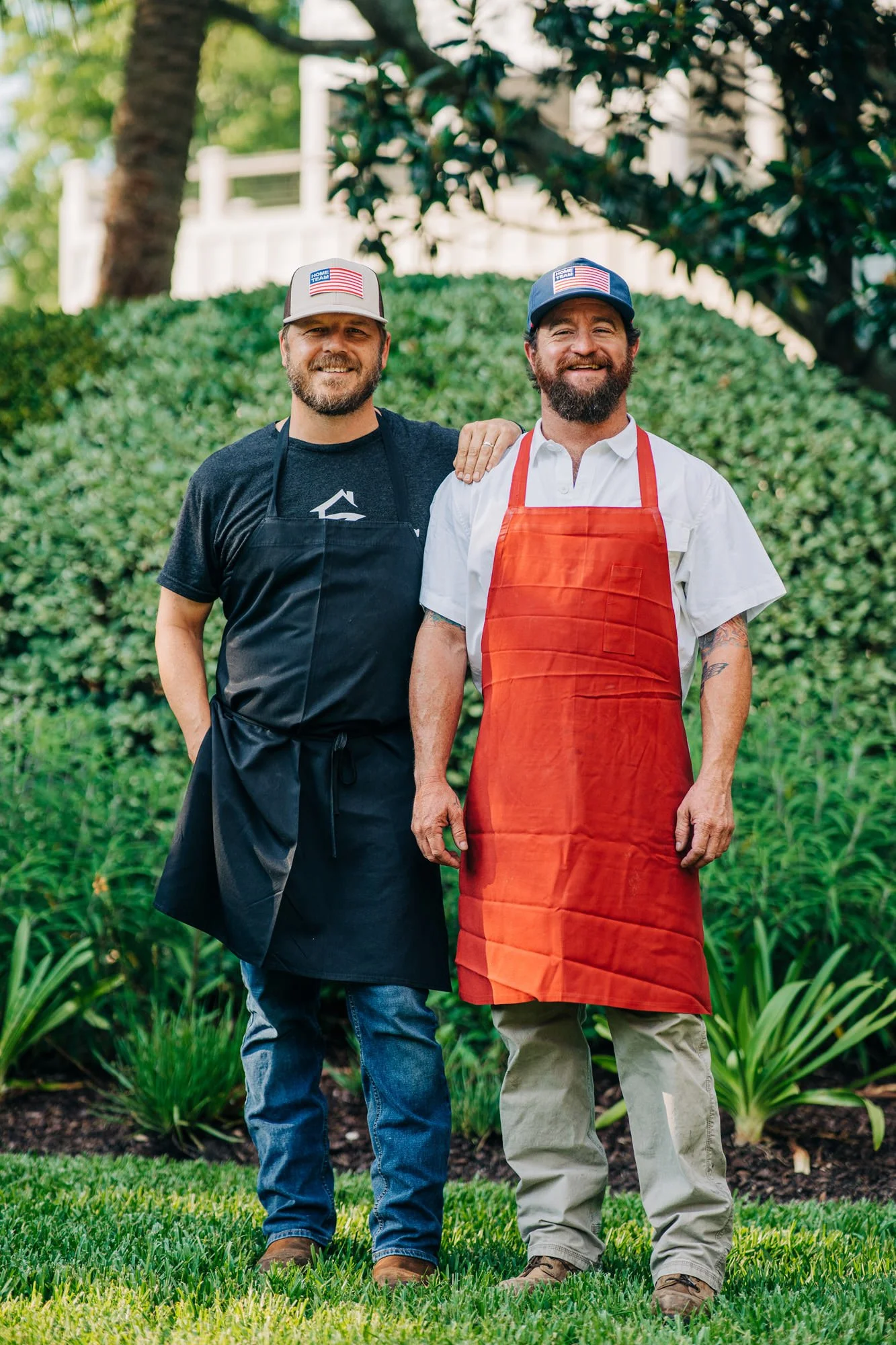
While Siegel claims he didn’t know much about barbecue, he did know how to build community. By collecting his “home team,” he was able to build his restaurant crew. For Widespread Panic fans, like him, a “home team” is a group of devotees who meet at concerts and support one another—whether that be a place to crash or a meal together. It’s a chosen family who happened to have a passion for the same band. It’s the origin of the restaurant’s name, and also how Siegel met his sous chef (now executive chef) Taylor Garrigan.
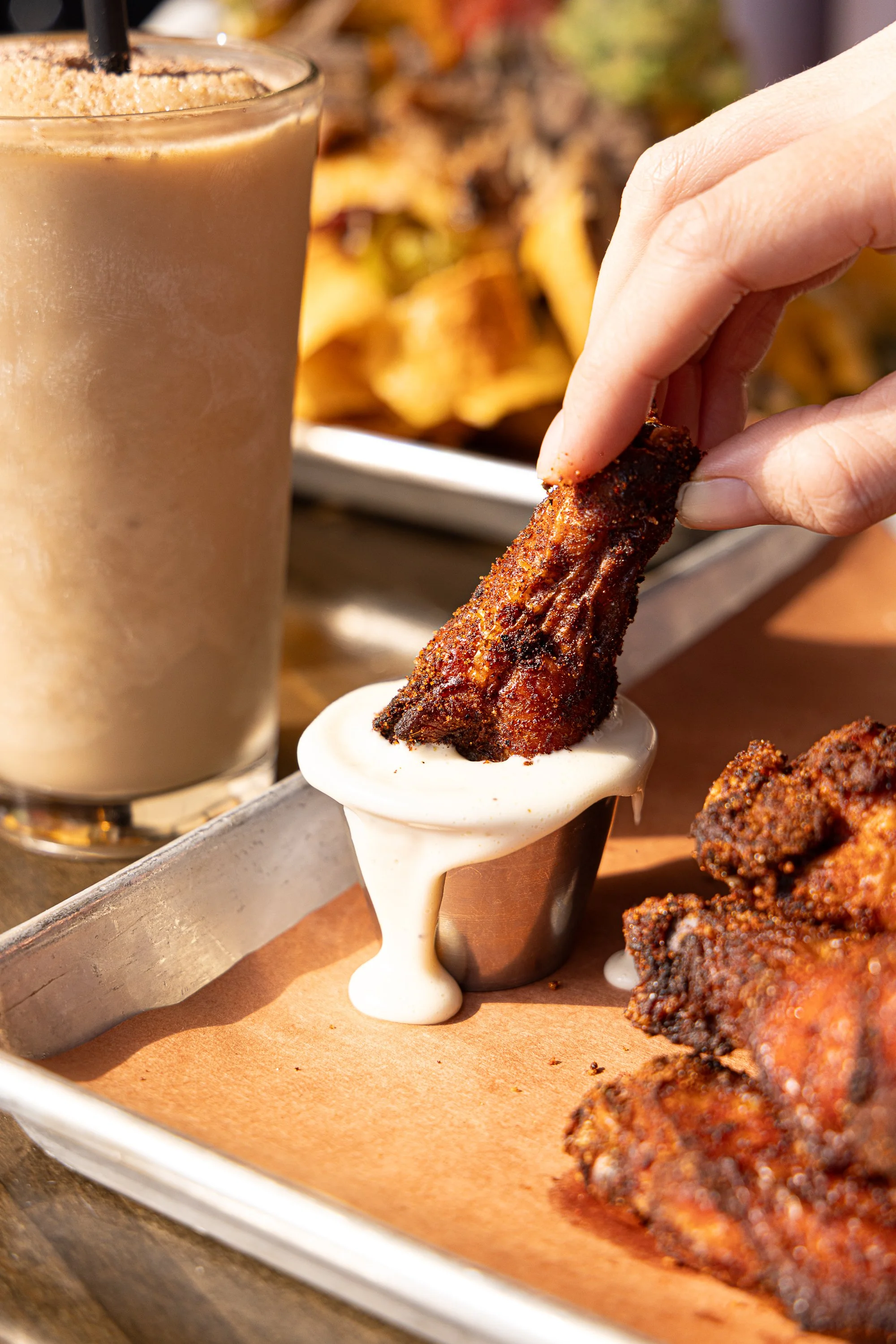
Photo Credit Maison Dube
The two connected at a Widespread Panic concert at Oak Mountain Amphitheater in Pelham, Alabama, and something clicked. Both had a passion for good food and live music, plus strong discipline from their white-tablecloth backgrounds. Garrigan was working at the acclaimed FIG at the time. To join Siegel, Garrigan asked for one stipulation: that he could grow his hair and beard out. A handshake soon followed.
“At the time, not a lot of people were doing barbecue and also a scene,” says Garrigan. “It was as much about the culture and a good time as the food, and that’s how we wanted it to be.”
Music plays a large part in creating the vibe at Home Team BBQ, which is why Siegel asked Tony McKie to acquire live acts for the space. The two met while Siegel was an undergrad and McKie was a sound technician in Athens. Over the years, the barbecue restaurant has hosted names like Big Bill Morganfield, Lil’ Dave Thompson, Los Lonely Boys, Colonel Bruce Hampton, American Aquarium, and so many more.
“When we were new to the scene, we didn’t have a reputation to project us, so we relied on our expertise and our love of live music and community,” says McKie. “We set up a local watering hole where you could get a great meal during the day, and then you could come and have a little honky tonk experience at night. We did a lot of blues, a lot of bluegrass, a lot of Americana, and country in the beginning. It turned into a place where people felt like they could come multiple times a week.”
Swig & Swine owner Anthony DiBernardo says that attending blues concerts at the restaurant with his late son, Asher DiBernardo, inspired him to open a barbecue place of his own. At 10 years old, Asher was learning to play drums, so Anthony took him to shows at Home Team BBQ. At these concerts, Anthony recognized that Charleston was hungry for a different type of barbecue than the mainstays. “At the time, the West Ashley Home Team was the cafeteria line. You’d walk through the line, and you’d get your tray of barbecue, and you’d find your own table, and get your own drink,” says Anthony, “So I thought, I can take my fine dining skills and casual dining experience with service, and mix it with barbecue, and do this.” After Swig & Swine, even more barbecue concepts popped up in Charleston, like Lewis Barbecue, Rodney Scott’s BBQ, and Palmira Barbecue.
As those other operators were planning or building, Home Team BBQ was expanding. First to Sullivan’s Island, where they brought on general manager Sean Daniher and introduced the world to the Gamechanger. Then downtown Charleston, Aspen, Columbia, Greenville, and Mount Pleasant. Walking into the different Home Team locations, customers are greeted with a familiar atmosphere: rustic wood walls, concert paraphernalia, tie-dye merch, and sports on the televisions, but each has its own personality. For example, everyone is on vacation (or pretending) at the beach location, while you’ll find buttoned-up business folks at the downtown address sitting next to college kids catching a game.
The restaurants have a way of pulling communities together, and the group also makes sure to give back to those neighbors. Supporting charitable efforts is one of the guiding principles for Home Team BBQ. Since opening, they’ve raised money for Hogs for the Cause, Ronald McDonald House Charities of Charleston, Touched by ALS, Operation Home, Camp Happy Days, and Shining Stars Foundation. They’ve also volunteered to feed local teachers and nurses. Proceeds from large events like Rock the Block and Holy Smokes BBQ Festival allow the group to give generously.
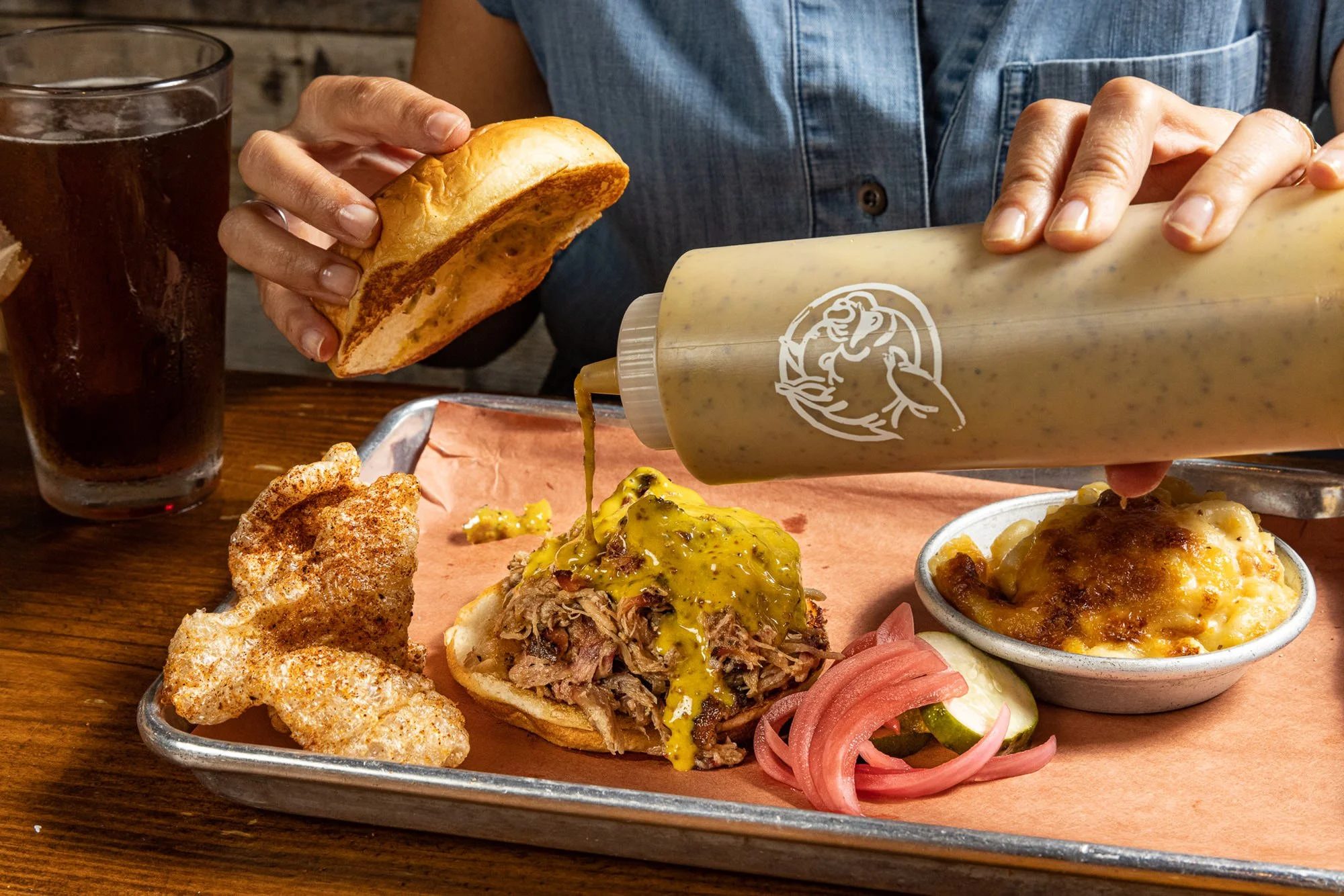
Photo Credit Jonathan Boncek
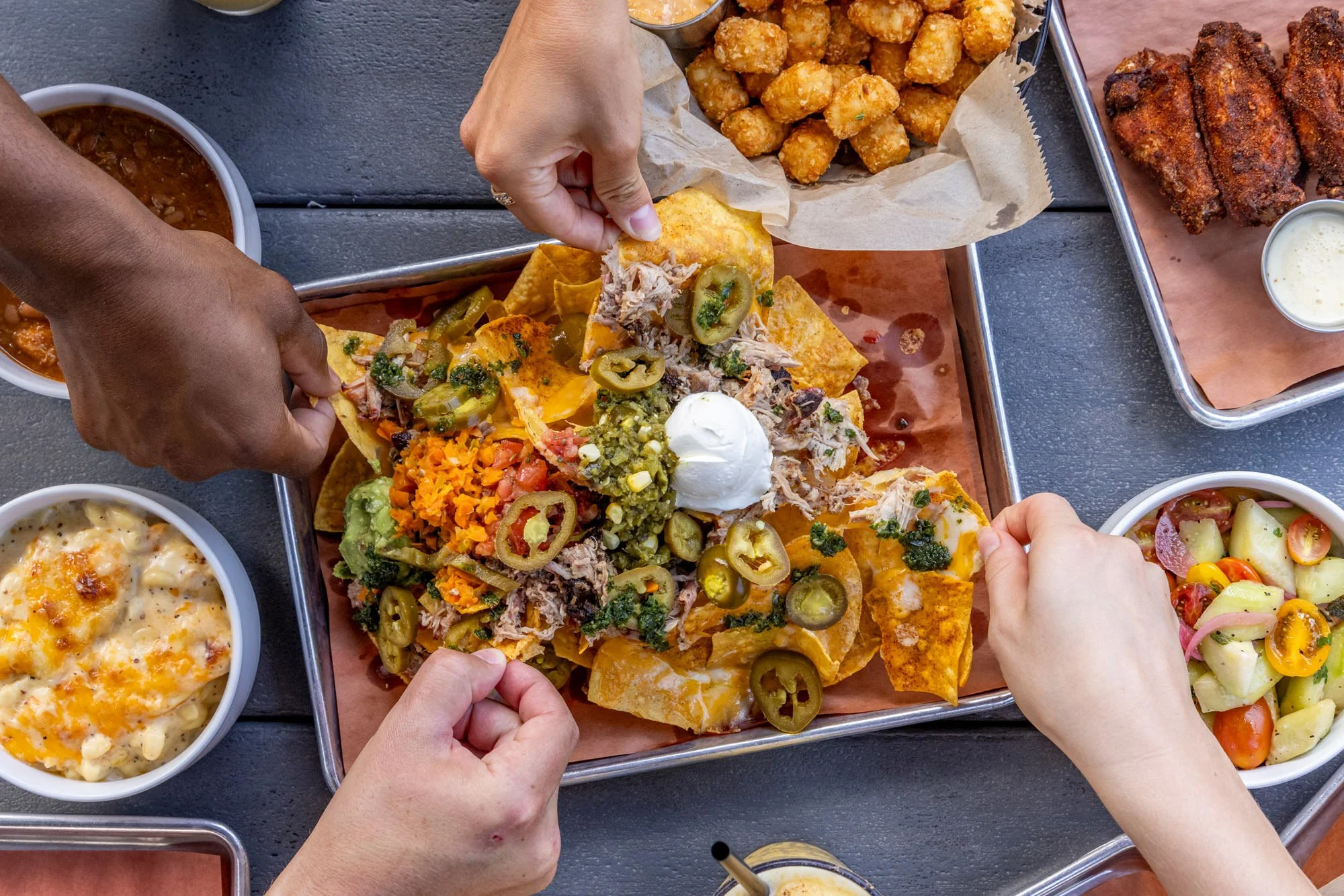
Photo Credit Jonathan Boncek
“We always knew that we wanted to build our business around a sense of community,” says McKie. “It’s not about us. It’s about the people that come to see us, and if we can give back to them, I feel that they will stick with us.”
Camaraderie and the idea of the “home team” are still part of the culture at Home Team BBQ today, where many employees and guests have been loyal to the restaurant for 20 years. When the first store opened in 2006, the restaurant had around 20 service workers. In 2026, the company now employs over 700 people across its seven properties. The growth from the original location hasn’t diluted the quality of the service, food, or atmosphere.
“It’s one thing to have a great place to go eat, but it’s another thing to have a relationship with that restaurant,” says Siegel.